
Natural Asphalt: Types, Specification and Use in Paving
Natural asphalt is not one product. Three different naturally occurring materials are sold under the name — vein asphaltite, rock asphalt and lake asphalt — and they differ in mineral content, dosage and what they do to a binder. Choosing between them on price alone is how a paving contractor ends up with a mix that will not compact. RAHA Gilsonite Co. supplies natural asphalt from the Iranian deposits in lump, powder and micronized form, against a batch certificate with the test methods named.
Figures from the natural rock asphalt specification below, each against a named ASTM method. Vein asphaltite carries different values — the comparison follows.
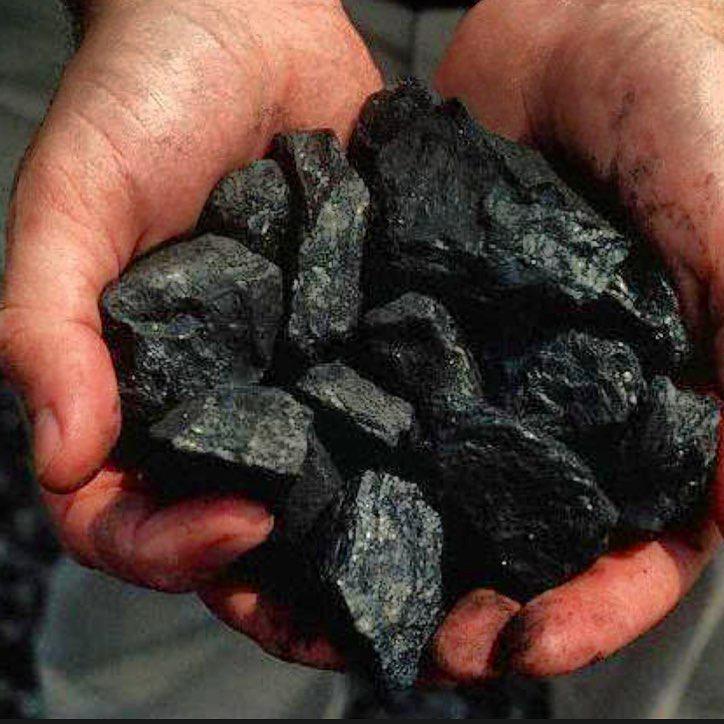
The three natural asphalts
All three formed the same way: hydrocarbon migrated out of a source rock, lost its volatile fraction and hardened where it stopped. What separates them is where it stopped, and that determines how much mineral matter came along.
Vein asphaltite
Hydrocarbon that filled near-vertical fractures and hardened there, mined as near-pure solid with very little mineral matter. This is the material usually traded as gilsonite or uintaite, and the natural bitumen page covers it in full. High purity, high softening point, low ash, and the highest price of the three.
Rock asphalt
Hydrocarbon that impregnated a porous host rock, usually limestone or sandstone, rather than filling an open fracture. What is mined is the impregnated rock itself, so the product is a mixture: bitumen plus the mineral it saturated. Asphalt content typically runs 80 to 85%, with the balance mineral.
That mineral fraction is not a defect. In a paving mix it behaves as very fine filler and contributes to the stiffening effect. But it changes the arithmetic of dosage, and it is why a rock asphalt specification shows an ash figure around 5% where a vein asphaltite shows a fraction of that.
Lake asphalt
Hydrocarbon that pooled at the surface in a natural seep and weathered there, Trinidad being the best known. It carries both mineral matter and water, and it is usually supplied refined rather than raw. Different again in handling and dosage.
| Vein asphaltite | Rock asphalt | Lake asphalt | |
|---|---|---|---|
| Occurrence | Fracture fill | Impregnated host rock | Surface seep |
| Mineral content | Very low | Roughly 15 to 20% | Substantial, plus water |
| Supplied as | Lump or ground powder | Ground powder | Usually refined |
| Dosage basis | Percentage of binder | Percentage of mix | Percentage of binder |
| Relative cost | Highest | Lower | Varies |
The dosage row is where most of the confusion lives, and the next section but one explains why it matters more than the price difference.
Natural rock asphalt specification
Every figure below carries the test method it was determined by, which is what makes a specification usable in a contract rather than merely informative.
| Test | Result | Method |
|---|---|---|
| Ash content, wt% | 5 | ASTM D3174 |
| Moisture content, wt% | 1 | ASTM D3173 |
| Volatile matter, wt% | 63 | ASTM D3175 |
| Solubility in CS₂, wt% | 81 | ASTM D4 |
| Specific gravity @ 25 °C | 1.11 | ASTM D3289 |
| n-Heptane insolubles, wt% | 79 | ASTM D3279 |
| Colour in mass | Black | — |
| Colour in streak or powder | Black | — |
| Softening point, °C | 175 | ASTM D36 |
| Penetration @ 25 °C | 0 | ASTM D5 |
Elemental analysis
| Element | wt% | Method |
|---|---|---|
| Carbon | 84 | ASTM D5291 |
| Hydrogen | 7.1 | ASTM D5291 |
| Nitrogen | 3.67 | ASTM D5291 |
| Oxygen | 3.1 | ASTM D5291 |
| Sulfur | 4 | LECO sulfur analyser |
What these numbers actually tell a buyer
Four of them carry more information than their size suggests.
Penetration 0 with a softening point of 175 °C. This is a brittle solid, not a soft binder. It stiffens a mix rather than softening it, and it has no ductility of its own, which is why dosage has a ceiling.
Solubility in carbon disulfide of 81%. This is the honest measure of how much of the product is bitumen. The remaining fifth is mineral matter and insoluble residue. A vein asphaltite would sit far higher, and the gap between the two numbers is the mineral content you are also buying.
n-Heptane insolubles of 79%. That is the asphaltene fraction, and it is high. Asphaltenes are what deliver stiffness, thermal stability and colour body, so this figure is the one that predicts performance in a binder.
Nitrogen at 3.67%. Nitrogen in this material sits in pyrrole, pyridine and amide functional groups rather than as a contaminant. Basic nitrogen adsorbs onto mineral surfaces, which is the mechanism behind the improved adhesion between aggregate and binder that paving contractors report. It also acts as a radical scavenger, contributing to oxidation resistance. The molecular structure page covers the chemistry.
Why mineral content changes the dosage arithmetic
This is the practical consequence of the whole first section, and getting it wrong is the commonest error with rock asphalt.
A vein asphaltite is dosed as a percentage of the binder, because it is essentially all binder-active material. Rock asphalt is roughly four-fifths bitumen and one-fifth mineral, so a given weight delivers correspondingly less active material and brings filler with it. Dose it as though it were vein asphaltite and the mix is under-modified and over-filled at the same time.
Two things follow for a mix designer. The active dosage has to be calculated on the bitumen content shown by the CS₂ solubility figure, not on the delivered weight. And the mineral fraction has to be counted in the aggregate gradation, because at the dosages used it is enough to shift the fines.
Published dosage guidance for rock asphalt generally runs in the range of a few percent by weight of total mix, against a few percent of binder weight for vein asphaltite. The two look similar written down and are not the same quantity at all. Trial mixes settle it; a published figure does not.
What natural asphalt does in a road
Natural asphalt has been used as a binder modifier in hot mix for decades, and the performance effects are well established.
| Effect | Mechanism |
|---|---|
| Higher rutting resistance | Asphaltene content raises high-temperature stiffness, so the binder resists permanent deformation under load |
| Reduced temperature susceptibility | The modified binder changes consistency less across the service temperature range |
| Better aggregate adhesion | Basic nitrogen functional groups adsorb onto mineral aggregate surfaces |
| Lower moisture sensitivity | Improved adhesion reduces stripping at the aggregate interface |
| Slower oxidative ageing | Condensed aromatic structure and radical-scavenging nitrogen sites resist oxidation |
| Higher performance grade | The stiffening effect lifts the upper PG temperature of the binder |
The limitation belongs in the same place as the benefits. Penetration zero means no ductility, so an excessive dose produces a binder that is stiff at high temperature and brittle at low temperature. That failure shows up a winter later rather than in the mix design laboratory, which is what makes it expensive. Keep the dose inside the range that trial mixing supports, and check low-temperature performance rather than assuming it.
Dosage and incorporation are covered on the asphalt modifier page, the blending route on mixing process, and mix design on asphalt mixture.
Natural asphalt against polymer modifiers
The comparison that decides most purchases is against SBS and other elastomeric polymer modifiers, and the two are genuinely different tools rather than competing versions of the same thing.
| Aspect | Natural asphalt | SBS and similar polymers |
|---|---|---|
| What it adds | Stiffness and adhesion | Elasticity and strain recovery |
| Plant requirement | Blends in without high-shear milling | Usually needs a high-shear mill |
| Storage stability | Stable in a compatible binder | Can separate on hot storage without stabiliser |
| Low-temperature behaviour | Stiffens; needs checking at the cold end | Improves low-temperature cracking resistance |
| Cost per tonne of binder effect | Lower | Higher |
Read across the table and the sensible conclusion is not that one replaces the other. Natural asphalt suits a specification driven by rutting resistance, high-temperature stability and adhesion, especially where the plant has no high-shear capability. A specification driven by low-temperature cracking or fatigue under repeated strain is a polymer job.
Many mixes use both, with natural asphalt carrying part of the stiffening requirement so the polymer dose can come down. That is usually where the economics work best, and it is a more defensible claim than a straight replacement.
Uses beyond road paving
Paving is the largest use but not the only one, and the controlling property changes with the application.
Drilling fluids
Sized particles seal microfractures by softening at bottom-hole temperature and deforming into the gap, which makes the material a fluid loss control agent and a shale inhibitor in one addition. It also works as a borehole lubricant and wall cake conditioner, and in cementing it helps keep interstitial water out of the formation during placement. See drilling fluids.
Printing ink and paint
Deep black mass colour plus resin function in a single raw material, used as a carbon black wetting agent in black inks. Here the ash figure matters a great deal, which makes rock asphalt the wrong choice and a selected low-ash vein grade the right one. See ink and paint.
Foundry sand
The lustrous carbon fraction pyrolyses at the mould face and lays down a reducing film that releases the casting cleanly. Sulfur matters here: at the level shown in the specification above, any ductile iron foundry should trial on its own castings. See foundry.
Construction and waterproofing
Mastics, protective coatings and bituminous membranes, where weathering resistance and adhesion to mineral substrates do the work. See construction grade.
Grades, mesh and packing
Material is supplied as lump or ground to a mesh specification, and the mesh is selected by application rather than by preference.
| Mesh | Typical use |
|---|---|
| Lump | Bulk supply for grinding at destination, or hot blending |
| 30 – 40 | Asphalt modification and coarse bridging in drilling fluids |
| 100 | General drilling fluid use and asphalt blending |
| 200 | Fine filtration control, paint and coating |
| 300 | Ink and applications needing the finest dispersion |
| Product | Packing |
|---|---|
| Lump | 500 – 1,000 kg jumbo bag |
| 30 – 40 mesh | 500 – 1,000 kg jumbo bag, or PP bag on pallet |
| 100 mesh | 500 – 1,000 kg jumbo bag |
| 200 mesh | 500 – 1,000 kg jumbo bag, 25 kg multi-wall paper bag, or 50 lb multi-wall paper bag |
| 300 mesh | 500 – 1,000 kg jumbo bag, or 25 kg PP bag |
| Bulk | Loaded on vessel |
Jumbo bags suit a plant with lifting equipment and a hopper. Paper and PP bags suit manual addition at the mixer. Say which applies at your site when ordering, because repacking after arrival costs more than specifying it correctly.
Where the material comes from
The Iranian natural asphalt deposits lie in the west of the country, in the Kermanshah region including Gilan-e Gharb, and extending toward Kuhdasht and Ilam. They have been worked since the 1940s, originally for road construction, and they are the main source of natural asphalt moving in international trade today.
The other commercial source worldwide is the Uinta Basin of Utah and Colorado in the United States, which supplies vein asphaltite. Published figures for sulfur and nitrogen differ between the two sources, which is why a specification should name the deposit rather than relying on a figure from a paper about the other one. The chemical characterization page sets this out.
The history of the deposits and their early working is covered on the natural asphalt history page.
Natural asphalt supply from RAHA Gilsonite
RAHA Gilsonite Co. supplies natural asphalt direct from the Iranian deposits, in lump, powder and micronized form, loading at Jebel Ali or Mersin.
Grade selection runs on the property that governs your application rather than on a catalogue name. For paving that means softening point and mesh; for ink it means ash; for drilling fluids it means softening point and particle size. Tell us the application and the specification you are working to, and the grade follows.
| Payment | 50% TT in advance, balance agreed with the order |
|---|---|
| Incoterms | FOB, CFR or CIF |
| Loading ports | Jebel Ali or Mersin |
| Minimum order | One full 20′ container |
| Lead time | Quoted per destination |
| Documentation | Specification sheet, SDS, batch certificate and certificate of origin |
Independent inspection at loading can be arranged on request — SGS, Bureau Veritas, Intertek or the surveyor named in your contract. Where a figure in the specification is contractual, having it determined by the inspection company rather than the supplier’s own laboratory is the sensible route.
Frequently asked questions
Types and terminology
What is natural asphalt?
A naturally occurring solid hydrocarbon used chiefly as a binder modifier in road paving. Three distinct materials are sold under the name: vein asphaltite, which is near-pure hydrocarbon from fracture fill; rock asphalt, which is hydrocarbon impregnated into a host rock and carries 15 to 20% mineral; and lake asphalt from surface seeps, which carries mineral and water.
What is the difference between natural asphalt and rock asphalt?
Rock asphalt is one type of natural asphalt. It is hydrocarbon that impregnated a porous limestone or sandstone rather than filling an open fracture, so the mined product is a mixture of bitumen and mineral, typically 80 to 85% asphalt content. Vein asphaltite, by contrast, is near-pure hydrocarbon with very little mineral matter.
Is natural asphalt the same as gilsonite?
Gilsonite is the vein asphaltite type of natural asphalt, so the terms overlap without being identical. Natural asphalt is the broader family, and rock asphalt and lake asphalt also belong to it. When a quotation says natural asphalt, ask which of the three it is and ask for the ash and CS₂ solubility figures.
Is natural asphalt the same as petroleum bitumen?
No. Petroleum bitumen is a residue from crude oil distillation and is the binder itself, with a penetration typically between 40 and 100. Natural asphalt is mined, registers penetration zero, and works as a modifier added to that binder. They also classify under different HS codes.
Specification
What does CS₂ solubility tell me?
It is the honest measure of how much of the product is actually bitumen. At 81%, roughly a fifth of the delivered weight is mineral matter and insoluble residue. Use this figure rather than the delivered weight when calculating active dosage, and expect a vein asphaltite to sit far higher.
Why does the nitrogen content matter?
Nitrogen sits in pyrrole, pyridine and amide functional groups rather than as a contaminant. Basic nitrogen adsorbs onto mineral aggregate surfaces, which is the mechanism behind improved binder-to-aggregate adhesion and reduced moisture sensitivity. It also scavenges free radicals, which slows oxidative ageing of the binder.
What does penetration zero mean on this specification?
In the standard penetration test a needle under a fixed load does not enter the material at all. It confirms a brittle solid rather than a soft binder, which is why the material stiffens a mix and why the dose has an upper limit before low-temperature cracking becomes a risk.
What is the n-heptane insolubles figure?
The asphaltene content, determined by precipitation in n-heptane. At 79% it is high, and asphaltenes are what deliver stiffness, thermal stability and colour body. It is the single figure that best predicts how the material will behave in a binder.
Using it in paving
How much natural asphalt goes into a mix?
It depends on which type. Vein asphaltite is dosed as a percentage of binder weight; rock asphalt is dosed as a percentage of total mix, because four-fifths of its weight is bitumen and the rest is mineral. Calculate the active dose from the CS₂ solubility figure, count the mineral fraction in your aggregate gradation, and confirm with trial mixes rather than a published number.
Does the plant need modifying?
Generally not. Natural asphalt blends into a hot binder without the high-shear milling that elastomeric polymer modifiers usually require, which is one of the main practical reasons plants adopt it. Addition point and mixing time still need setting for the specific plant.
Can natural asphalt replace SBS polymer modification?
Partly, and the honest answer is that they do different jobs. Natural asphalt adds stiffness and adhesion; SBS adds elasticity and strain recovery. Where the specification is driven by rutting and high-temperature stability, natural asphalt can carry the requirement. Where it is driven by low-temperature cracking or fatigue, it cannot. Many mixes use both so the polymer dose can come down.
What is the risk of over-dosing?
A binder that is stiff at high temperature and brittle at low temperature. Because the material has penetration zero and no ductility of its own, excess dose trades rutting resistance for cold cracking, and that failure appears a winter later rather than during mix design. Check low-temperature performance rather than assuming it.
Ordering
Which mesh should I order?
Lump or 30 to 40 mesh for asphalt modification and coarse bridging, 100 mesh for general drilling fluid and blending use, 200 mesh for fine filtration control and coatings, and 300 mesh for ink and anything needing the finest dispersion. Mesh follows the application rather than preference.
How is it packed?
Lump and most mesh grades in 500 to 1,000 kg jumbo bags. Finer grades are also available in 25 kg PP bags, 25 kg multi-wall paper bags and 50 lb multi-wall paper bags, and 30 to 40 mesh in PP bags on pallets. Bulk loading on vessel is available. Say whether your site has lifting equipment, since repacking after arrival costs more than specifying correctly.
What should I ask for with a quotation?
The type of natural asphalt, ash and CS₂ solubility, softening point with the test method, mesh, and the deposit of origin. Those five decide whether the quotations you are comparing are for the same thing. For anything contractual, work from the batch certificate rather than a published typical value.
Related pages
- Natural bitumen — the vein asphaltite in full, properties and grades
- Asphalt modifier — dosage and binder modification
- Asphalt mixture — mix design and performance
- Mixing process — how it is blended into the binder
- Road construction — pavement applications
- Specification — the full physical and thermal data
- Natural asphalt history — the deposits and their early working
- HS code — customs classification for export
