
Oxidized bitumen 85/40 is the softest grade in the blown range that still carries a useful softening point, and it exists for one reason: cold climates. At 80 to 90 °C softening point with 35 to 45 dmm penetration, it is the grade that lets a membrane sheet be unrolled and folded in a Russian, Scandinavian or northern Chinese winter without cracking. Every other blown grade fails that test.
RAHA Gilsonite supplies oxidized bitumen 85/40 against ASTM D312, BS EN 13304:2009 or a buyer’s own specification, with a batch certificate of analysis issued before loading. This page covers the specification, why low-temperature flexibility is the property that matters here, the coating temperatures, and the storage precautions this grade needs more than any other.
What is oxidized bitumen 85/40?
Oxidized bitumen, also called blown bitumen or blown asphalt, is produced by blowing air through hot penetration grade bitumen at around 240 to 260 °C. Oxygen reacts with the maltene fraction and converts it toward asphaltenes. The binder becomes harder, the softening point climbs and the penetration falls.
Reading the designation
The grade name reads softening point over penetration. In oxidized bitumen 85/40, the 85 is the ring-and-ball softening point in degrees Celsius and the 40 is the penetration at 25 °C in tenths of a millimetre. Under BS EN 13304:2009, oxidised grades are expressed as multiples of 5, so 85/40 is a standard-defined grade within that European framework.
The lightly blown end of the range
85/40 has been blown just far enough to raise the softening point roughly 30 °C above the penetration grade feedstock, and no further. The asphaltene network has begun to form but has not tightened into the gel structure that makes harder grades brittle.
What survives that light treatment is low-temperature flexibility — the property that every other blown grade sacrifices. A membrane coated with 85/40 can be unrolled at 0 °C and folded at an upstand without fracturing. The same sheet coated with 95/25 cracks.
The forgotten failure mode. Most discussion of roofing grade selection focuses on summer heat, because that is when membranes visibly sag and flow. Cold failure is quieter and happens at installation rather than in service: the roll cracks as it is unwound, the fold splits at the parapet, the sheet shatters when a worker steps on it. Contractors blame handling. The real cause is a binder too hard for the temperature it was laid at.
Oxidized bitumen 85/40 specification
| Property | Unit | Specification | Typical result | Test method |
|---|---|---|---|---|
| Softening point (ring & ball) | °C | 80–90 | 85 | ASTM D36 / EN 1427 |
| Penetration @25 °C, 100 g, 5 s | dmm | 35–45 | 40 | ASTM D5 / EN 1426 |
| Loss on heating | wt % | 0.5 max | 0.2 | ASTM D6 |
| Flash point (Cleveland open cup) | °C | 235 min | 260 | ASTM D92 |
| Solubility in trichloroethylene | wt % | 99 min | 99.5 | ASTM D2042 |
| Specific gravity @25 °C | — | 1.00–1.05 | 1.02 | ASTM D70 |
| Ductility @25 °C | cm | 3.5 min | 4–7 | ASTM D113 |
| Ash content | wt % | 0.5 max | 0.2 | ASTM D2939 |
| Spot test | — | Negative | Negative | AASHTO T102 |
Ductility is the highest of any blown grade we supply and it is a genuine specification limit rather than an informational figure. For cold-climate membrane it is the single most predictive number on the certificate. Where a project specification calls for a cold bend or low-temperature flexibility test in addition, tell us at the enquiry stage. Test methods are maintained by ASTM International.
Applications of oxidized bitumen 85/40
-
Cold-climate roofing membrane
The dominant use. Coating compound for bitumen felt and torch-on membrane sold into Russia, the Baltics, Scandinavia, northern China, Korea, Mongolia and Central Asia.
-
Damp proof course sheet
DPC manufacture where the roll is stored cold and unwound on site in winter conditions. The highest flexibility requirement of any DPC application.
-
Winter-laid built-up roofing
Mopping and bonding compound between plies where the work continues through the cold season rather than pausing for it.
-
Below-grade waterproofing in frost zones
Foundation tanking where ground freeze and thaw cycles move the substrate seasonally.
-
Expansion joint sealants
Joints with large seasonal movement, where the gap opens most at exactly the temperature the binder is least flexible.
-
Flexible construction adhesives
Board and insulation bonding in unheated buildings and cold-store construction.
-
Sound damping in cold service
Automotive damping compounds for vehicles operating in northern markets, where a brittle pad delaminates from the panel.
-
Pipe wrapping in frozen ground
Wrapping tape compounds for pipeline laid in permafrost or seasonal frost, where the pipe flexes during installation.
Where 85/40 is the wrong grade
Do not use it anywhere warm. The 80 to 90 °C softening band is the lowest of any grade we recommend for roofing, and a dark roof surface in a Mediterranean summer already reaches 75 °C. In the Gulf, North Africa or South Asia the sheet will soften, flow at the laps and can slide on a pitched roof within the first season. Those markets need 105/35 or harder.
Equally, do not specify it for pipe coating enamel, sealing compounds on static joints, or any industrial compound that carries sustained load. Creep resistance at 40 dmm is poor. That work belongs to 90/10, 105/15 or harder.
85/40 against 90/40 and 85/25
These three are the shortlist for temperate and cold membrane production, and the differences are small but consequential.
| 85/40 | 90/40 | 85/25 | |
|---|---|---|---|
| Softening point | 80–90 °C | 85–95 °C | 80–90 °C |
| Penetration | 35–45 dmm | 35–45 dmm | 20–30 dmm |
| Cold flexibility | Best of the three | Very good | Moderate |
| Heat margin | Lowest | Slightly better | Same as 85/40 |
| Suits winter installation | Yes — the correct choice | Yes | Marginal below about 5 °C |
| Suits warm markets | No | Temperate only | Temperate only |
| Relative cost | Similar | Similar | Lowest |
| Coating temperature | 155–180 °C | 160–185 °C | 170–195 °C |
The comparison with 90/40 is the closest call. Both carry the same penetration; 90/40 has 5 °C more softening point. For genuinely cold markets 85/40 has the edge on flexibility; for markets with cold winters but warm summers, 90/40 gives useful extra margin at no cost in fold tolerance. If you are unsure which, tell us the two extremes the finished sheet will see and we will say which fits.
How 85/40 compares with the full oxidized range
| Grade | Softening point | Penetration | Class | Principal use |
|---|---|---|---|---|
| 150/5 | 145–155 °C | 0–10 dmm | Hardest | Electrical compounds, battery sealing, pipe enamel, rubber |
| 115/15 | 110–120 °C | 10–20 dmm | Hard | Waterproofing, adhesives, sealing, pipe coating |
| 105/35 | 100–110 °C | 30–40 dmm | Medium | Membrane for hot climates |
| 105/15 | 100–110 °C | 10–20 dmm | Hard | Sealing, jointing, industrial mastics |
| 95/25 | 90–100 °C | 20–30 dmm | Medium | Membrane and damp proofing in warm markets |
| 90/40 | 85–95 °C | 35–45 dmm | Softer | Membrane for temperate and cool climates |
| 90/15 | 85–95 °C | 10–20 dmm | Medium | Adhesives, sealing compounds, mastics |
| 90/10 | 85–95 °C | 5–15 dmm | Hard | Pipe coating, cable filling, tank lining |
| 85/40 | 80–90 °C | 35–45 dmm | Softest useful | Cold-climate membrane, DPC, winter installation |
| 85/25 | 80–90 °C | 20–30 dmm | Medium | The volume roofing grade worldwide |
| 75/35 | 70–80 °C | 30–40 dmm | Softest | Damp proofing, low-temperature climates |
| 75/25 | 70–80 °C | 20–30 dmm | Softest | General waterproofing, jointing |
The full range is listed on our oxidized bitumen grades page.
Melting and coating temperatures
| Operation | Temperature | Notes |
|---|---|---|
| Melting | 155–180 °C | The lowest of any blown grade. Melts readily; do not overheat out of habit |
| Pumping | 165–185 °C | Heat traced lines. Sets quickly in cold pipework |
| Coating / application | 175–200 °C | Membrane lines usually run at the upper end for even film thickness |
| Absolute maximum | 210 °C | The lowest ceiling in the range. Above this the penetration falls fast |
| Hot holding | Avoid entirely where possible | This grade hardens faster under prolonged heat than any other |
85/40 is the easiest blown grade to destroy in the melter. A production line set up for 85/25 and switched to 85/40 without changing the temperature settings will run 20 °C too hot. Across a shift that can pull the penetration from 40 down toward 30, and the finished sheet loses exactly the cold flexibility it was specified for. The customer discovers it in January, on a roof.
If you are changing grades on an existing line, change the temperature settings first. Test the penetration on the finished sheet after the first run, not only on the incoming bags.
Safety
The flash point is 235 °C minimum. That is lower than the harder grades and closer to the working range, so the margin is thinner — another reason not to run hot. If the material foams, spits or crackles as it heats, water is present; stop heating rather than trying to drive it off. Handling guidance is published by Eurobitume and the Asphalt Institute.
Packing, storage and shipping
| Packing | Unit weight | Per 20′ container | Notes |
|---|---|---|---|
| Carton box | 25 kg | Up to 22 MT | Recommended for this grade. Rigid walls resist block deformation in transit |
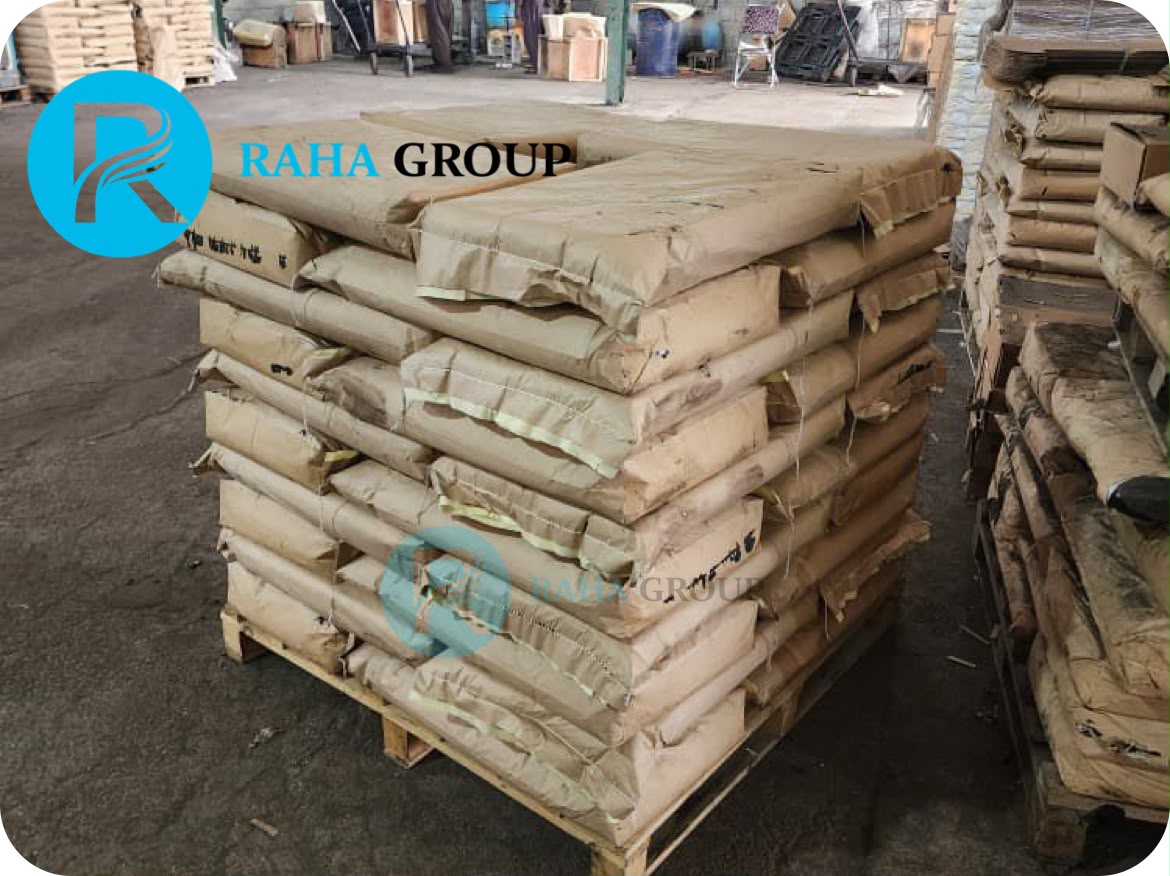
| Kraft paper bag | 25 kg | Up to 25 MT palletised | Meltable bag options available. Needs careful stacking |
| PP bag | 25 kg | Up to 25 MT palletised | Palletised and shrink wrapped |
| New steel drum | 180–190 kg | 80 drums ≈ 15 MT | The safest option for long tropical sea legs. Requires a drum melter |
Storage and shelf life — read this before ordering
Two to three years in sealed packing kept dry, cool and out of direct sun. Chemical ageing is slow because the material is already blown.
The physical risk is higher for 85/40 than for any other grade in the range. At 40 dmm with a softening point of only 80 to 90 °C, the blocks are soft and the margin to the softening point is narrow. A container crossing the Red Sea or the equator reaches 60 to 70 °C internally. A pallet left standing in tropical sun at a transit port can approach the softening range directly.
The result is a stack fused into a single mass that has to be broken up before it can be charged into a melter, which costs labour and can damage the packing. In severe cases blocks deform enough that the pallet collapses.
- Specify carton packing where the route is long or hot. The rigid walls hold block shape far better than bags.
- Limit stacking to two tiers, never more.
- Unload promptly on arrival rather than leaving containers standing in a yard.
- Store under cover, never in direct sun, and prefer the coolest available warehouse space.
- Consider drums for shipments to or through tropical transhipment hubs.
Our bitumen shelf life and storage guide covers the full picture including retest thresholds.
Customs classification
The grade falls under HS 2713.20, petroleum bitumen. Bagged and drummed material at ambient temperature is generally not classified as dangerous goods for sea carriage, although most shipping lines and destination customs still require the safety data sheet with the booking. Note that gilsonite and other natural bitumen fall under a different heading.
Quality control and certification
Every shipment leaves with a batch certificate of analysis stating the lot number, the production date, the standard tested against and each test with its method and measured result. We accept third-party inspection at loading by SGS, Bureau Veritas, Intertek or any surveyor named in your contract.
What to check for this grade
Read ductility and penetration together. Both are genuine limits here and both predict cold behaviour. A batch at 89 °C softening point with 36 dmm penetration technically passes 85/40 but sits at the hard corner and behaves closer to 90/40 — which may be acceptable or may be exactly what you were trying to avoid.
If your market is genuinely cold, contract to a narrower band such as 82 to 87 °C with 39 to 44 dmm. And if the project specification includes a cold bend or low-temperature flexibility requirement, send it to us rather than the grade name so we can confirm the batch meets it.
Frequently asked questions about oxidized bitumen 85/40
What does 85/40 mean in oxidized bitumen?
The first number is the ring-and-ball softening point in degrees Celsius, so approximately 85 °C. The second is the penetration at 25 °C in tenths of a millimetre, so approximately 40 dmm. The specification runs 80–90 °C for softening point and 35–45 dmm for penetration.
What is oxidized bitumen 85/40 used for?
Principally roofing felt and membrane manufacture for cold climates — Russia, the Baltics, Scandinavia, northern China, Korea, Mongolia and Central Asia. Also damp proof course sheet, winter-laid built-up roofing, below-grade waterproofing in frost zones, expansion joint sealants, flexible construction adhesives and pipe wrapping in frozen ground.
Why choose 85/40 over the more common 85/25?
They share the same softening point band but 85/40 carries roughly double the penetration — 35 to 45 dmm against 20 to 30. That difference decides whether a membrane sheet survives being unrolled and folded in winter. 85/25 becomes marginal below about 5 °C and cracks at the fold; 85/40 stays workable. In genuinely cold markets the extra flexibility is not optional.
What is the difference between 85/40 and 90/40?
They carry the same penetration band of 35 to 45 dmm; 90/40 has roughly 5 °C more softening point. For genuinely cold markets 85/40 has a slight edge on flexibility. For markets with cold winters but warm summers, 90/40 gives useful extra heat margin at no cost in fold tolerance. Tell us the two temperature extremes the finished sheet will see and we will say which fits.
Can 85/40 be used for roofing in hot climates?
No. The 80 to 90 °C softening band is the lowest of any grade suitable for roofing, and a dark roof surface in a Mediterranean summer already reaches 75 °C. In the Gulf, North Africa or South Asia the sheet will soften, flow at the laps and can slide on a pitched roof within the first season. Those markets need 105/35 or harder.
What temperature do I melt oxidized bitumen 85/40 at?
Melt at 155 to 180 °C, pump at 165 to 185 °C and coat at 175 to 200 °C, using indirect heating. Do not exceed 210 °C — the lowest ceiling of any blown grade. A line set up for 85/25 and switched to 85/40 without changing settings runs about 20 °C too hot and will strip out the cold flexibility the grade was chosen for.
Why does 85/40 need special storage care?
Because the blocks are soft and the margin between storage temperature and the softening point is narrow. A container crossing the Red Sea or the equator reaches 60 to 70 °C internally, and a pallet in tropical sun can approach the softening range directly. The stack fuses into a single mass that must be broken up before melting. Specify carton packing on long or hot routes, limit stacks to two tiers, and unload promptly on arrival.
Is oxidized bitumen 85/40 the same as blown asphalt 85/40?
Yes. Oxidized bitumen, blown bitumen and blown asphalt all describe the same product — penetration grade bitumen air-blown at high temperature to raise the softening point and reduce the penetration. The naming varies by region rather than by product.
Does 85/40 have a ductility requirement?
Yes, typically 3.5 cm minimum at 25 °C — the highest of any blown grade we supply, and a genuine specification limit rather than an informational figure. For cold-climate membrane it is the single most predictive number on the certificate, because it indicates directly whether the finished sheet will crack when folded.
What is the shelf life of oxidized bitumen 85/40?
Two to three years in sealed packing kept dry, cool and out of direct sun. Chemical ageing is slow because the material is already blown. The practical limit is physical rather than chemical: at 40 dmm with a low softening point, block fusion under heat and stacking pressure is a real risk on hot routes.
What is the HS code for oxidized bitumen?
HS 2713.20, petroleum bitumen, which covers all oxidized and penetration grades. National tariffs add further digits, so confirm the full code with your customs broker. Gilsonite and other natural bitumen fall under a different heading.
What is the minimum order quantity?
One full 20′ container, roughly 22 to 25 MT depending on packing. Mixed grades in one shipment are accepted provided each grade reaches one full container. Loading is from Jebel Ali Port in Dubai or Iskenderun Port in Turkey, on FOB, CFR or CIF terms.
Can you supply against a tighter specification or a cold bend requirement?
Yes. For genuinely cold markets it is worth contracting to a narrower band such as 82 to 87 °C softening point with 39 to 44 dmm penetration. Where the project specification includes a cold bend or low-temperature flexibility test, send us the specification rather than the grade name so we can confirm the batch meets it before shipment.
Related grades and technical pages
Adjacent grades: oxidized bitumen 90/40 for temperate markets with warmer summers, 85/25 where cost dominates and winters are mild, 75/35 for the softest end of the range, and 105/35 for hot-climate membrane. The complete list is on the oxidized bitumen grades page.
Where a compound needs additional hardness, gloss or a higher softening point than blown bitumen alone can deliver, gilsonite is frequently blended in — see gilsonite specification, gilsonite in paint and gilsonite in asphalt. For the difference between air-blown and naturally occurring hard bitumen, see natural bitumen.
Request a quotation for oxidized bitumen 85/40
Send us the quantity, packing, discharge port and the specification your contract names. Tell us the coldest temperature at which the finished membrane will be installed and the hottest it will see in service — those two numbers decide whether 85/40 is right or whether 90/40 suits better. Batch certificate of analysis with every shipment, third-party inspection accepted at loading.
Dubai: No. 2305, Burlington Tower, Business Bay — +971 4 566 4998
Ankara: Karşıyaka District, 749 Street No. 30, Gölbaşı 06830 — +90 312 544 5481
Isfahan: Second Floor, Navab Complex, Navab Safavi St
