
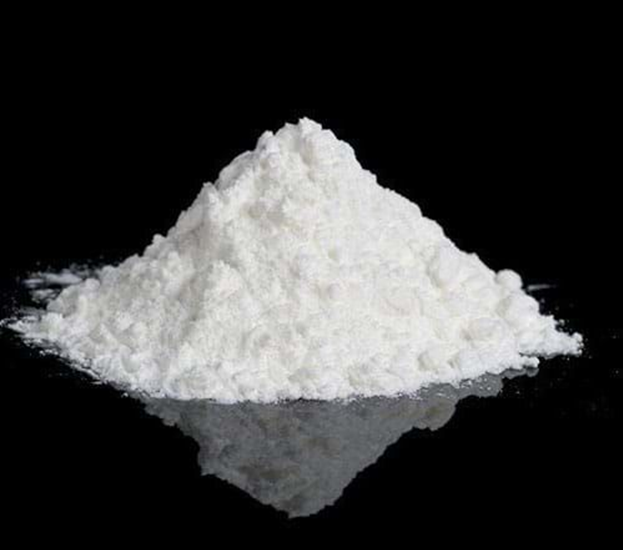
Carboxymethyl cellulose (CMC) is a water-soluble anionic cellulose ether used in water-based drilling fluids for filtration control and viscosity. It is the lowest-cost polymer that does the job properly, which is why it remains the default choice in fresh-water systems despite newer alternatives.
The question that decides most purchases is not whether CMC works. It is which grade, and what the purity figure on the datasheet actually means.
What CMC Is
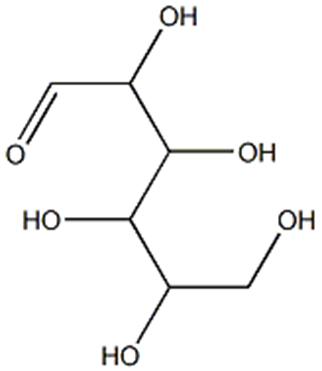
CMC is made by treating purified cellulose with sodium hydroxide, then reacting it with monochloroacetic acid. The reaction attaches carboxymethyl groups (–CH₂–COO⁻) to the cellulose chain, which makes the polymer water-soluble and gives it a negative charge along its length.
In solution it behaves as a pseudoplastic, non-Newtonian fluid: viscous at rest, thinner under shear. That is exactly the behaviour a drilling fluid needs — thick enough in the annulus to carry cuttings, thin enough at the bit to pump without excessive pressure.
The Purity Range, and What You Are Buying
Datasheets quote CMC purity anywhere from 55% to 99%, and that spread confuses more buyers than any other figure on the sheet. It is not a quality grading in the way it looks.
What the other 40% is. Technical-grade CMC is sold without removing the by-products of its own manufacture — mostly sodium chloride and sodium glycolate. A 55% purity product is roughly 55% active polymer and 45% salt. Purified grades have had those by-products washed out, which costs more to produce.
For a drilling fluid this matters in two ways. First, you are paying freight on the inactive fraction, so cost per sack and cost per barrel treated are different numbers. Second, the salt that comes with technical grade enters your mud system, which may or may not matter depending on the formulation.
| Grade | Active content | Where it is used |
|---|---|---|
| Technical | 55 – 65% | Drilling fluids, detergents, ceramics, construction |
| Semi-purified | 75 – 90% | Paints, textiles, paper, oilfield where salt matters |
| Purified | ≥ 95% | Food, pharmaceutical, cosmetics |
For most drilling applications, technical grade is the correct and economical choice. Specifying food-grade purity for a mud system is paying for a property the well does not use.
Specification
| Parameter | Typical value |
|---|---|
| Chemical name | Sodium carboxymethyl cellulose |
| Appearance | White to cream free-flowing powder |
| Active content | 55% – 99% by grade |
| Degree of substitution | 0.4 – 0.9 (technical); 0.65 – 0.95 (purified) |
| Viscosity, 1% solution | 10 – 10,000 mPa·s by grade |
| pH (1% solution) | 6.0 – 8.5 |
| Moisture | ≤ 10% |
| Particle size | 95% through 80 mesh (typical) |
| Shelf life | 2 years, sealed, dry storage |
Viscosity figures are only comparable at matching conditions. A 1% solution on a Brookfield at 25 °C and a 2% solution on a Fann 35 will give very different numbers for the same powder. Before concluding that one supplier’s product is thinner, confirm the concentration, the instrument and the temperature.
Degree of Substitution
The degree of substitution (DS) is the average number of carboxymethyl groups attached per glucose unit. It ranges from 0 (plain cellulose, insoluble) to a theoretical 3.
DS controls three things that matter in the field:
- Solubility. Below about 0.4 the polymer does not dissolve reliably.
- Salt tolerance. Higher and more uniform substitution keeps the polymer in solution in brine. This is the whole basis of the difference between CMC and PAC.
- Hydration rate. Higher DS hydrates faster and more completely.
Technical CMC sits at 0.4 to 0.9. PAC is manufactured to 0.9 and above with more even distribution along the chain. That single difference is why one survives saturated salt and the other does not.
CMC LV vs CMC HV
Drilling-grade CMC is supplied in two viscosity classes, designated CMC-LVT and CMC-HVT under API 13A. Both are the same chemistry; the difference is polymer chain length.
| CMC LV (LVT) | CMC HV (HVT) | |
|---|---|---|
| Molecular weight | Lower | Higher |
| Primary function | Filtration control | Viscosity plus filtration control |
| Effect on rheology | Minimal | Raises PV and YP noticeably |
| Typical use | Weighted muds where viscosity is already adequate | Low-solids muds needing hole cleaning |
| Typical treating rate | 0.5 – 2.0 lb/bbl | 0.25 – 1.0 lb/bbl |
The selection logic mirrors the PAC grades exactly: if the mud has the viscosity it needs and only the filtrate must come down, use LV. If you need both from one sack, use HV.
CMC in Drilling Fluids
CMC performs three jobs in a water-based mud, and it is worth being precise about which is which.
Filtration control
The polymer adsorbs onto clay platelets in the filter cake and bridges between them, reducing cake permeability. It also raises the viscosity of the filtrate itself, which slows flow through the cake. The result is lower fluid loss and a thinner cake. See fluid loss control.
Viscosity and cuttings transport
In the HV grade, the long polymer chains raise low-shear viscosity, which is what keeps cuttings suspended when circulation stops. The shear-thinning behaviour means this does not translate into excessive pump pressure.
Clay stabilisation
By adsorbing onto exposed clay surfaces, CMC provides a degree of encapsulation that limits dispersion. This is a secondary benefit, not a substitute for a proper inhibitor such as KCl or an amine.
Mixing
Add slowly through the hopper with the shear pump running. Added too fast, CMC forms fish-eyes — lumps with a hydrated gel skin sealing dry powder inside. These never dissolve and are screened out at the shakers, so the material is paid for and discarded.
Where CMC Stops Working
CMC has three hard limits, and knowing them is more useful than any list of advantages.
| Limit | Threshold | What happens |
|---|---|---|
| Temperature | ~121 °C (250 °F) | Thermal degradation begins; filtrate rises progressively |
| Salinity | Above roughly 10% NaCl | Polymer begins to drop out; filtration control is lost |
| Calcium hardness | Elevated Ca²⁺ / Mg²⁺ | Flocculation; the polymer precipitates |
| pH | Below 6 | Chain hydrolysis accelerates |
The practical decision. If the mud is fresh water with low hardness and bottom-hole temperature stays under about 250 °F, CMC is the right product and anything more expensive is over-specification. Cross any one of those three thresholds and CMC will fail regardless of how much you add — the answer is a different polymer, not a higher concentration.
CMC or PAC
| CMC | PAC | |
|---|---|---|
| Degree of substitution | 0.4 – 0.9 | 0.9 – 1.2 |
| Salt tolerance | To about 10% NaCl | To saturation |
| Calcium tolerance | Poor | Good |
| Temperature limit | ~121 °C | ~149 °C |
| Cost per sack | Lower | Higher |
In fresh water, CMC does the same job for less money. In seawater, KCl or saturated brine, CMC is not a cheaper option — it is simply the wrong one. Full detail on the alternative is on the PAC LV and PAC HV pages.
For sections hotter than either polymer survives, the filtration package changes entirely. Gilsonite seals physically rather than chemically, so heat makes it more deformable rather than destroying it.
Other Industries
CMC is a genuinely multi-industry product, and the grade requirements differ sharply between them:
| Industry | Function | Grade required |
|---|---|---|
| Drilling fluids | Filtration control, viscosity | Technical, 55 – 65% |
| Detergents | Anti-redeposition — keeps soil suspended | Technical |
| Paints and coatings | Pigment dispersion, brushability | Semi-purified |
| Paper and textiles | Sizing, coating rheology | Semi-purified |
| Food | Water binding, texture, prevents syneresis | Purified, ≥ 95% |
| Ceramics | Green strength, plasticity | Technical |
A supplier quoting one price for CMC without asking which industry it is for is quoting a number that will not hold once the grade is specified.
Storage and Handling
- Store sealed, dry, off the ground and out of direct sunlight
- Humidity is the main enemy — absorbed moisture causes caking and slows hydration
- Shelf life two years in intact packaging
- Non-hazardous; standard dust precautions apply when handling powder
Frequently Asked Questions
What is CMC used for in drilling fluid?
Filtration control and viscosity in water-based muds. The low-viscosity grade reduces fluid loss with minimal effect on rheology, while the high-viscosity grade also builds the low-shear viscosity that carries cuttings. It additionally provides a degree of clay encapsulation, though that is secondary to a dedicated shale inhibitor.
Why does CMC purity range from 55% to 99%?
Because technical grade is sold without removing the by-products of its own manufacture, mainly sodium chloride and sodium glycolate. A 55% product is roughly 55% active polymer and 45% salt. Purified grades have those washed out at additional cost. For drilling, technical grade is normally the correct and more economical choice.
What is the difference between CMC LV and CMC HV?
Polymer chain length. CMC LV (CMC-LVT) controls filtration with little effect on viscosity; CMC HV (CMC-HVT) raises plastic viscosity and yield point as well. Use LV when the mud already has adequate rheology, HV when you need filtration control and hole cleaning from one product.
What is DS in CMC?
Degree of substitution: the average number of carboxymethyl groups attached per glucose unit of the cellulose chain. Technical CMC runs 0.4 to 0.9. It controls solubility, salt tolerance and hydration rate, and it is the figure that separates CMC from PAC.
What temperature can CMC withstand?
Approximately 121 °C (250 °F). Above that the polymer degrades thermally and filtrate rises progressively. Raising the concentration does not compensate; the filtration package has to change.
Does CMC work in salt water?
Up to roughly 10% sodium chloride. Beyond that the polymer begins to drop out of solution and filtration control is lost. It is also sensitive to calcium and magnesium hardness, which cause flocculation. For saline or hard systems, PAC is the correct product rather than more CMC.
Is CMC biodegradable?
Yes. It is derived from natural cellulose and breaks down biologically. It is non-toxic and approved for food use in purified grades, which is also why it is accepted in environmentally regulated drilling areas.
How much CMC should be added per barrel?
Typically 0.5 to 2.0 lb/bbl for the LV grade and 0.25 to 1.0 lb/bbl for HV. These are starting points for pilot testing against the actual mud system and the target filtrate, not a substitute for it.
Request a Quotation for CMC
Tell us the industry, the viscosity grade and the purity you need and we will confirm the specification and price. Samples and certificates of analysis available on request. Supplied from Dubai and Ankara offices.
Related pages: PAC LV · PAC HV · KCl in Drilling · Bentonite in Drilling · Water-Based Muds · Fluid Loss Control · Gilsonite in Drilling Fluids
