Gilsonite Price: 2026 Rates by Grade and Mesh
Gilsonite price runs from roughly $530 to $650 per metric tonne FOB, depending on grade, mesh and ash content. There is no exchange and no public benchmark — every tonne is negotiated — so a published range tells you where to start, not what you will pay. This page gives the indicative rates by grade, the six variables that move them, and the one thing that affects Iranian gilsonite pricing more than any other: when in the year you buy.
Indicative figures for planning, not an offer. Grade, volume, packing, payment terms and destination all move the final number. Request a quotation for the grade and destination you are working to.
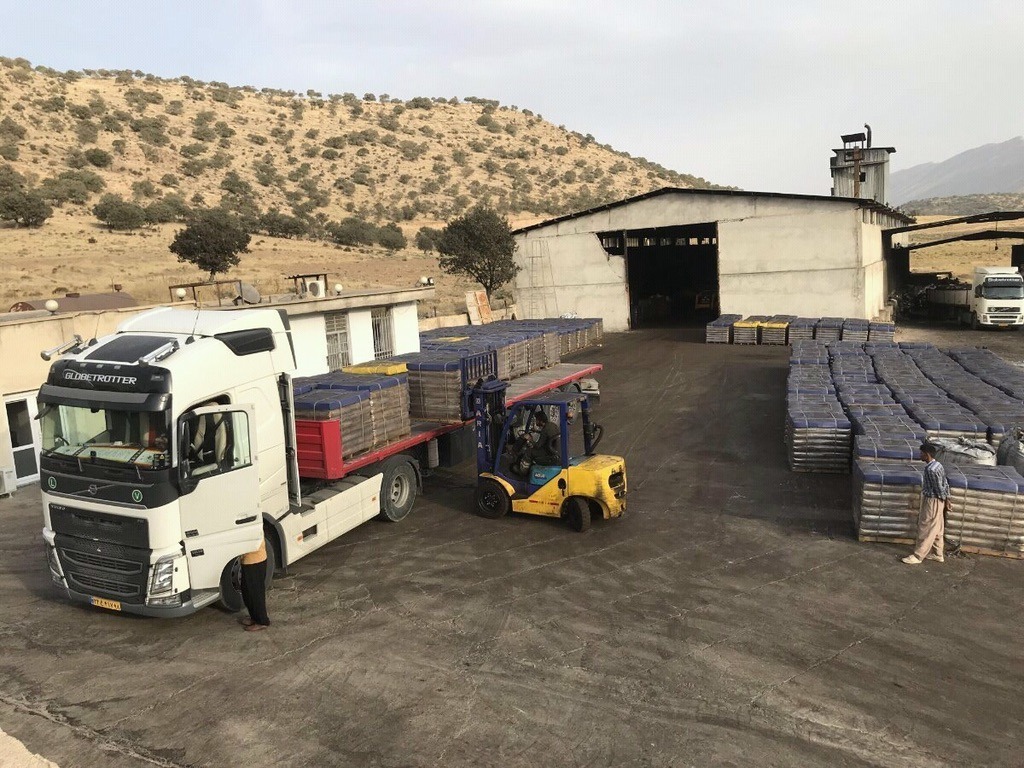
Gilsonite price by grade and mesh
These are indicative FOB rates for material loading at Jebel Ali or Mersin. They assume jumbo bag packing, one full container, and standard payment terms.
| Grade | Mesh | Max ash | Main application | USD / MT |
|---|---|---|---|---|
| Low grade, high ash | Mixed | 15 – 20% | Basic waterproofing | $530 – $550 |
| Lump | Unsized | <15% | General, resale, grinding at destination | $560 – $600 |
| Powder | 20 – 40 | <15% | Asphalt and construction | $560 – $600 |
| Powder | 80 – 120 | <15% | Drilling fluid and cementing | $570 – $610 |
| Powder | 200 | <15% | Inks, paints and coatings | $580 – $620 |
| High purity | 100 – 200 | <10% | Specialty chemical and foundry | $620 – $650+ |
Selected low-ash grades below 10% are quoted separately against the specification, because availability and price both depend on what the working face is yielding at the time.
What moves the gilsonite price
Six variables account for nearly all the spread between the lowest and highest figures above. Because they are predictable, understanding them is what separates a buyer who plans procurement from one who simply takes whatever the spot market offers.
Mesh and fineness
Grinding costs money, and finer grinding costs disproportionately more, since throughput falls as the target mesh rises while the mill works harder for each tonne. So a 200-mesh powder carries noticeably more processing cost per tonne than unsized lump, which makes it the single clearest driver in the table above.
The practical consequence: do not buy finer than the application needs. A drilling fluid that performs on 80 to 120 mesh gains nothing from 200 mesh except cost.
Ash content and purity
Ash is mineral matter that came out of the ground with the hydrocarbon, so removing it means selecting material rather than processing it. Low-ash grades therefore depend on what the deposit is yielding, which makes them both more expensive and less reliably available.
In ink and paint, ash shows in the finished result, so a low-ash specification is not negotiable. In asphalt and waterproofing it rarely matters, and paying an ash premium there is money spent on a property the application never uses.
Seasonal availability
This is the largest short-term driver of Iranian gilsonite pricing, larger than crude oil and larger than freight. The next section covers it in full, because it is also the one a buyer can actually plan around.
Crude oil and the bitumen benchmark
Gilsonite tracks crude oil and global bitumen prices loosely rather than tightly. The correlation exists because the competing and substitute materials are petroleum products, but it is weak enough that trying to time a gilsonite purchase off an oil chart is not worth the effort.
Packing and order size
Jumbo bags carry the lowest cost per tonne. Paper sacks and small PP bags, by contrast, add handling and material cost, typically a few tens of dollars per tonne, so they are worth paying for only where the receiving site has no lifting equipment or the material is resold in small lots.
Volume matters at the container level rather than continuously: the step from one container to a regular monthly programme changes a quotation more than any single-order increase.
Destination and incoterms
FOB is the basis for every figure on this page. CFR and CIF add ocean freight and insurance, and freight has been the most volatile component of a landed price in recent years — more volatile than the material itself. Where a budget has to hold, fixing freight at the time of order matters more than shaving a few dollars off the FOB rate.
The seasonal window: when to buy
Iranian gilsonite follows an annual cycle that is predictable enough to plan a year’s procurement around, and it is the most useful thing on this page for anyone buying regularly.
The deposits are worked as open-pit and shallow tunnel operations in the west of the country. Through the wet months the workings flood, so extraction becomes difficult and in places stops altogether. As a result output falls, available material concentrates with a small number of stockists, and prices firm accordingly.
| Period | Mine status | Supply | Price | What to do |
|---|---|---|---|---|
| October – March | Wet season, workings flooded | Very low | Firm, 15 – 30% above summer | Avoid spot buying; draw on stock |
| March – April | Reopening | Moderate | Returning to base | Start placing orders |
| April – September | Dry season, full operation | High | Lowest of the year | Buy, and cover the winter |
The procurement implication is straightforward. A buyer with storage who places orders between April and August pays the year’s lowest rate and carries stock through the tight months. By contrast, a buyer who orders in December pays the year’s highest rate and competes for whatever the stockists are holding.
For anyone running a continuous process, the arithmetic usually favours buying ahead even after storage cost. A 15 to 30% seasonal swing is larger than the cost of holding material for a few months, and the material is stable in a dry store.
Which grade your application needs
The cheapest tonne that meets the specification is the right tonne. So this table maps applications to the grade they actually require, because the price tier should follow from the technical need rather than from a sales preference.
| Application | Grade | Typical mesh | Governing property |
|---|---|---|---|
| Road asphalt and hot mix | Standard powder or lump | 20 – 40 | Softening point |
| Drilling fluid | Standard powder | 80 – 120 | Softening point and particle size |
| Well cementing | Standard powder | 80 – 100 | Specific gravity |
| Printing ink | Low ash, fine | 200 | Ash and colour in mass |
| Paints and coatings | Low ash, fine | 200 | Ash and solubility |
| Foundry and casting | High purity | 100 – 200 | Lustrous carbon and sulfur |
| Waterproofing membranes | Standard or lump | 20 – 40 or lump | Softening point |
Two of these rows save real money when they are read properly. Since asphalt and waterproofing tolerate higher ash, there is no reason to buy a low-ash grade for either. Ink and paint, however, do not tolerate it, so there is equally no point saving on ash and reworking the batch later.
What a published price cannot tell you
Gilsonite does not trade on an exchange. There is no settlement price, no index and no public benchmark, so every figure published anywhere — including on this page — is one supplier’s indication rather than a market rate. Three things follow.
The FOB number is not the landed cost
Ocean freight, insurance, port charges, customs duty and inland haulage all sit on top, and in recent years freight has moved further than the material price itself. So a quotation that looks twenty dollars cheaper per tonne on FOB can still land more expensive once the whole chain is counted. Compare landed cost rather than FOB.
Duty depends on the correct tariff classification, which for gilsonite is 2714.90. The HS code page covers the classification and the commonest error, which is declaring it as petroleum bitumen under 2713.20 and attracting a duty rate that should not apply.
Price without specification means nothing
A quotation that names no ash figure, no mesh and no softening point method is simply not comparable with one that does. In fact the cheapest number in a set of quotations is very often the one with the loosest specification behind it, although the difference shows up in the ink or in the mix rather than on the invoice.
When comparing offers, line them up on ash, mesh, softening point with its test method, and whether a batch certificate comes with the shipment. Then compare prices.
Availability is part of the price
A low rate for material that cannot ship until the mines reopen is not a low rate. Ask what is physically available now, and what the lead time is from order to loading, before treating any figure as real.
Getting an accurate quotation
Six details turn a range into a number. Sending them with the enquiry removes a round of questions and usually gets a better price too, because a supplier quoting against a clear specification does not have to price in uncertainty.
| Detail | Why it changes the quotation |
|---|---|
| Application | Determines which properties actually have to be met, and which can be relaxed |
| Mesh and maximum ash | The two largest drivers of the per-tonne figure |
| Quantity and frequency | A monthly programme prices differently from a single container |
| Destination port | Sets freight, and therefore the difference between FOB and CIF |
| Packing required | Jumbo bags, paper sacks or PP bags carry different costs |
| Timing | Decides whether the order falls in the open or the tight part of the year |
Supply and commercial terms
RAHA Gilsonite Co. supplies gilsonite direct from the Iranian deposits in lump, powder and micronized grades, loading at Jebel Ali or Mersin.
| Payment | 50% TT in advance, balance agreed with the order |
|---|---|
| Incoterms | FOB, CFR or CIF |
| Loading ports | Jebel Ali or Mersin |
| Minimum order | One full 20′ container |
| Packing | Jumbo bags, 25 kg paper sacks or PP bags |
| Lead time | Quoted per destination |
| Documentation | Specification sheet, SDS, batch certificate and certificate of origin |
Independent inspection at loading can be arranged on request — SGS, Bureau Veritas, Intertek or the surveyor named in your contract. Where a specification figure is contractual, having it verified by the inspection company rather than the supplier’s own laboratory is the sensible route.
Frequently asked questions
The price
What is the price of gilsonite per tonne?
Indicatively $530 to $650 per metric tonne FOB, depending on grade. High-ash material for basic waterproofing sits at the bottom of that range, lump and standard asphalt grades around $560 to $600, drilling and cementing grades slightly above, and high-purity low-ash material at $620 and up. Gilsonite does not trade on an exchange, so every tonne is negotiated and these figures are a starting point rather than an offer.
Why is there no fixed gilsonite price?
There is no exchange, no settlement price and no public index for gilsonite. Supply comes from a small number of deposits, specifications vary widely between grades, and seasonal availability moves the market by 15 to 30% within a single year. Every figure published anywhere is one supplier’s indication, which is why specification and timing matter more than any headline rate.
Why does the price rise in winter?
The Iranian deposits are worked as open-pit and shallow tunnel operations. Through the wet months from roughly October to March the workings flood, extraction becomes difficult and in places stops. Output falls sharply, available material concentrates with a small number of stockists, and prices firm by 15 to 30% above summer rates.
When is the best time to buy?
April to September, with orders ideally placed between April and August. That is when the mines run at full capacity, supply is at its highest and prices at their lowest. A buyer with storage can cover the winter at the summer rate, and for a continuous process the seasonal swing usually exceeds the cost of holding stock.
What affects what you pay
Why does finer mesh cost more?
Milling throughput falls as the target mesh rises, so each tonne takes longer and costs more to produce. The practical advice is not to buy finer than the application requires: a drilling fluid that performs on 80 to 120 mesh gains nothing from 200 mesh except cost.
Why do low-ash grades cost more?
Ash is mineral matter that came out of the ground with the hydrocarbon, so low-ash material is selected rather than processed. That makes it dependent on what the working face is yielding, which raises both price and lead time. It is worth paying for in ink and paint, where ash shows in the result, and not worth paying for in asphalt or waterproofing.
How much do CFR and CIF add over FOB?
Ocean freight plus insurance, which varies by destination and by the freight market at the time of booking. Freight has been the most volatile part of a landed price in recent years, more volatile than the material itself, so fixing it at the time of order matters more than shaving a few dollars off the FOB rate.
Does gilsonite price follow crude oil?
Loosely. The competing and substitute materials are petroleum products, so a correlation exists, but it is weak. Seasonal mine availability is a far stronger short-term driver for Iranian material than any oil benchmark.
Ordering
What is the minimum order quantity?
One full 20′ container. Sample quantities can be arranged separately for qualification and trial work. Regular monthly programmes are quoted differently from single orders, so say which you are planning when you enquire.
What packing is available and what does it cost?
Jumbo bags, 25 kg paper sacks and PP bags. Jumbo bags carry the lowest cost per tonne; sacks and small bags add handling and material cost. Sacks are worth paying for where the receiving site has no lifting equipment or the material is resold in small lots.
What should I send to get an accurate quotation?
Application, mesh and maximum ash, quantity and frequency, destination port, packing required, and your timing. A supplier quoting against a clear specification does not have to price in uncertainty, so a complete enquiry usually returns a better number as well as a faster one.
How should I compare quotations from different suppliers?
Line them up on ash, mesh and softening point with its test method, and check whether a batch certificate comes with the shipment. Then compare landed cost rather than FOB. The cheapest headline figure is very often the one with the loosest specification behind it, and that difference appears in your process rather than on the invoice.
Related pages
- Specification — the physical and thermal data behind the grades
- HS code — customs classification and duty implications
- Natural bitumen — what the material is and how to specify it
- Gilsonite powder — mesh grades
- Micronized gilsonite — the finest grades
- Safety and handling — dust control and transport
