
Oxidized bitumen 105/15 is the hard twin of 105/35. Both hold a softening point around 105 °C, but 105/15 has roughly half the penetration — 10 to 20 dmm against 30 to 40. Same heat resistance, far less flexibility. That single difference decides which of the two your application needs, and getting it wrong is the most common specification error in the blown bitumen range.
RAHA Gilsonite supplies oxidized bitumen 105/15 against ASTM D312, BS EN 13304:2009 or a buyer’s own specification. This page covers the specification, where the grade belongs and where it does not, the melting and application temperatures, and the comparison with 105/35 that most buyers actually need before they order.
What is oxidized bitumen 105/15?
Oxidized bitumen, also called blown bitumen or blown asphalt, is produced by blowing air through hot penetration grade bitumen at around 240 to 260 °C. Oxygen reacts with the maltene fraction and converts it toward asphaltenes. The binder becomes harder, the softening point climbs and the penetration falls.
Reading the designation
The grade name reads softening point over penetration. In oxidized bitumen 105/15, the 105 is the ring-and-ball softening point in degrees Celsius and the 15 is the penetration at 25 °C in tenths of a millimetre — meaning a standard needle sinks only 1.5 mm under defined test conditions. Under BS EN 13304:2009, oxidised grades are expressed as multiples of 5, so 105/15 is a standard-defined grade within that European framework.
Why 105/15 exists alongside 105/35
The two numbers in a blown bitumen designation are set by how far the air-blowing process is taken and by the feedstock it starts from. It is possible to reach the same softening point by two different routes, and the resulting binders behave differently.
105/15 has been blown harder relative to its softening point. The result is a stiffer, more brittle material with a tighter molecular structure. It resists deformation and creep better than 105/35, but it has almost no capacity to accommodate movement. Bend a sheet made with 105/15 and it cracks; bend one made with 105/35 and it flexes.
The decision rule. If the finished product will move — rolled, folded, laid over a substrate that expands and contracts, or subject to seasonal joint movement — specify 105/35. If it will sit still and only needs to resist heat and deformation, 105/15 is the harder, more dimensionally stable choice and usually the cheaper one per tonne of performance.
Oxidized bitumen 105/15 specification
| Property | Unit | Specification | Typical result | Test method |
|---|---|---|---|---|
| Softening point (ring & ball) | °C | 100–110 | 105 | ASTM D36 / EN 1427 |
| Penetration @25 °C, 100 g, 5 s | dmm | 10–20 | 15 | ASTM D5 / EN 1426 |
| Loss on heating | wt % | 0.5 max | 0.2 | ASTM D6 |
| Flash point (Cleveland open cup) | °C | 250 min | 275 | ASTM D92 |
| Solubility in trichloroethylene | wt % | 99 min | 99.5 | ASTM D2042 |
| Specific gravity @25 °C | — | 1.00–1.06 | 1.04 | ASTM D70 |
| Ductility @25 °C | cm | Report | 1.5–2.5 | ASTM D113 |
| Ash content | wt % | 0.5 max | 0.2 | ASTM D2939 |
| Spot test | — | Negative | Negative | AASHTO T102 |
Ductility is reported rather than specified for this grade. At 15 dmm the material is close to the point where it fractures rather than stretches, so the figure is informative rather than a pass or fail criterion. Test methods are maintained by ASTM International. Where a project names a specification that differs from the values above, send us the specification rather than the grade name and we will confirm what meets it.
Applications of oxidized bitumen 105/15
Every application below shares one characteristic: the compound has to stay put. None of them involve significant movement, which is precisely why the harder grade is correct.
-
Pipe coating enamel
Hot-applied anti-corrosion enamel for buried steel pipeline, blended with filler and reinforced with glass wrap. The high softening point resists soil temperature and the hardness resists mechanical damage during backfill.
-
Sealing and jointing compounds
Pourable and trowelled sealants for construction joints, tank seams and duct work where the joint is static rather than expanding seasonally.
-
Industrial mastics
Filling and levelling compounds for industrial floors, plant rooms and heavy-duty substrates that need chemical resistance and no cold flow.
-
Construction adhesives
Bonding compounds for board, panel and insulation lamination where the assembly is fixed and heat resistance matters more than flexibility.
-
Cable and electrical compounds
Jointing and filling compounds for cable runs and electrical enclosures. Dielectrically stable and will not flow at operating temperature.
-
Damp proofing in hot climates
Below-grade coatings on rigid substrates where the 105 °C softening point matters and the substrate does not move.
-
Roofing primer and base coat
Priming and base layers under membrane, as distinct from the membrane coating itself, which needs the softer 105/35.
-
Chemical and marine mastic
Tank lining, port and offshore mastics where resistance to acids, alkalis and salt water governs.
Where 105/15 is the wrong grade
Do not use 105/15 as the coating compound for roofing felt, torch-on membrane or damp proof course sheet. At 15 dmm the sheet cracks at the fold and fails at the lap. That work belongs to 105/35, 95/25 or 85/25 depending on climate. If a specification names 105/15 for membrane manufacture, query it before ordering — it is usually a transcription error for 105/35.
105/15 against 105/35 in detail
This is the comparison that decides most orders, so it is worth setting out properly.
| Oxidized bitumen 105/15 | Oxidized bitumen 105/35 | |
|---|---|---|
| Softening point | 100–110 °C | 100–110 °C |
| Penetration | 10–20 dmm | 30–40 dmm |
| Behaviour at ambient | Hard, brittle, fractures under bending | Firm but flexible, tolerates folding |
| Ductility @25 °C | 1.5–2.5 cm | 2–4 cm |
| Resistance to creep and deformation | Higher | Lower |
| Suits membrane manufacture | No | Yes — the standard choice |
| Suits pipe coating | Yes — the standard choice | Acceptable where the pipe flexes during laying |
| Suits sealing compounds | Yes, for static joints | Yes, for joints that move |
| Melting temperature | 180–205 °C | 170–195 °C |
A binder that arrives at the hard corner of the 105/35 window — 109 °C softening point with 31 dmm penetration — behaves closer to 105/15 in practice. This is why the batch certificate matters more than the grade name. Ask for the measured figures, not the specification range.
How 105/15 compares with the full oxidized range
| Grade | Softening point | Penetration | Class | Principal use |
|---|---|---|---|---|
| 150/5 | 145–155 °C | 0–10 dmm | Hardest | Electrical compounds, battery sealing, pipe enamel, rubber |
| 115/15 | 110–120 °C | 10–20 dmm | Hard | Waterproofing, adhesives, sealing compounds, pipe coating |
| 105/35 | 100–110 °C | 30–40 dmm | Medium | Roofing felt, membrane, general adhesive work |
| 105/15 | 100–110 °C | 10–20 dmm | Hard | Pipe coating, sealing, jointing, industrial mastics |
| 95/25 | 90–100 °C | 20–30 dmm | Medium | Roofing membrane, damp proofing |
| 90/40 | 85–95 °C | 35–45 dmm | Softer | Roofing felt, membrane in cooler climates |
| 90/15 | 85–95 °C | 10–20 dmm | Medium | Adhesive and sealing work at lower service temperature |
| 90/10 | 85–95 °C | 5–15 dmm | Hard | Pipe coating, industrial compounds |
| 85/40 | 80–90 °C | 35–45 dmm | Softer | Membrane, roofing, damp proof course |
| 85/25 | 80–90 °C | 20–30 dmm | Medium | The volume roofing grade worldwide |
| 75/35 | 70–80 °C | 30–40 dmm | Softest | Damp proofing, low-temperature climates |
| 75/25 | 70–80 °C | 20–30 dmm | Softest | General waterproofing, jointing |
The full range is listed on our oxidized bitumen grades page.
105/15 against 90/10 and 115/15
90/10 is harder still but with a lower softening point, so it is stiffer at ambient while offering less heat resistance — suited to pipe coating in temperate ground rather than hot climates. 115/15 shares the same penetration band as 105/15 but adds 10 °C of softening point, which matters on exposed surfaces in the Gulf, North Africa and South Asia. Where budget allows and service temperature is high, 115/15 is the safer specification.
Melting and application temperatures
| Operation | Temperature | Notes |
|---|---|---|
| Melting | 180–205 °C | Indirect heating only. Melt the full charge and homogenise before drawing off |
| Pumping | 190–210 °C | Lines and pumps must be heat traced or the material will set in them |
| Application / blending | 200–225 °C | Pipe coating lines typically run at the upper end for even film build |
| Absolute maximum | 230 °C | Above this the material cokes, fumes heavily and the softening point drifts |
| Hot holding | Not recommended | Melt per batch. Prolonged holding hardens the grade further |
Safety
The flash point is 250 °C minimum, so there is margin against the working range, but fume generation and thermal burn risk are real at these temperatures. Because bitumen is a poor conductor of heat, the melting phase must be controlled to prevent localised overheating. If the material foams, spits or crackles as it heats, water is present — stop heating rather than trying to drive it off. Handling guidance for bituminous binders is published by Eurobitume and the Asphalt Institute.
Packing, storage and shipping
| Packing | Unit weight | Per 20′ container | Notes |
|---|---|---|---|
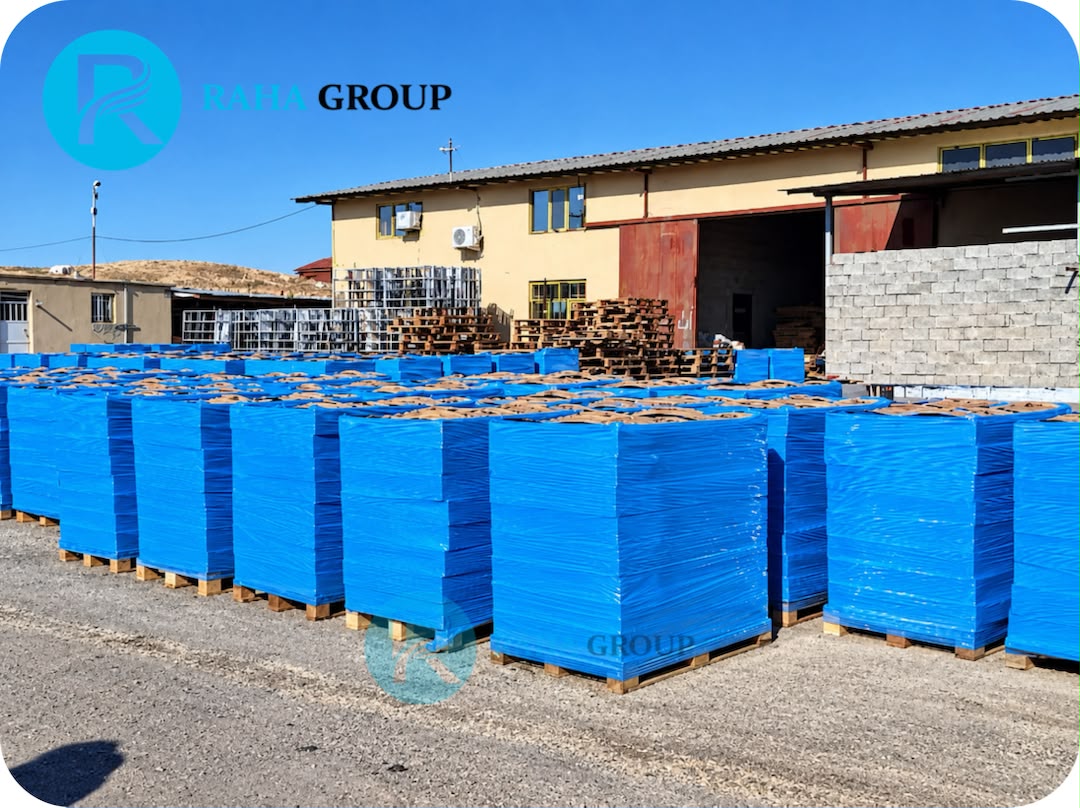
| Kraft paper bag | 25 kg | Up to 25 MT palletised | Most common. Meltable bag options available so the bag goes into the melter |
| PP bag | 25 kg | Up to 25 MT palletised | Palletised and shrink wrapped |
| Carton box | 25 kg | Up to 22 MT | Better protection for long transit and rough handling |
| New steel drum | 180–190 kg | 80 drums ≈ 15 MT | Requires cutting or a drum melter at destination |
Storage and shelf life
Two to three years in sealed packing kept dry and out of direct sun. Because the material is already fully blown there is little left for atmospheric oxygen to react with, so chemical ageing runs slowly.
105/15 stores better than the softer grades. At 15 dmm the blocks stay firm enough that stack fusion is far less of a problem than with 105/35 or 85/40. Standard practice still applies: pallets, under cover, no more than two tiers, batch number filed with the certificate of analysis.
Customs classification
The grade falls under HS 2713.20, petroleum bitumen. Bagged and drummed material at ambient temperature is generally not classified as dangerous goods for sea carriage, although most shipping lines and destination customs still require the safety data sheet with the booking. Note that gilsonite and other natural bitumen fall under a different heading.
Quality control and certification
Every shipment leaves with a batch certificate of analysis stating the lot number, the production date, the standard tested against and each test with its method and measured result. We accept third-party inspection at loading by SGS, Bureau Veritas, Intertek or any surveyor named in your contract.
What to check on the certificate for this grade
Read softening point and penetration together and check them against the batch, not the range. Because 105/15 and 105/35 share a softening point band, a certificate that shows only the softening point tells you nothing about which grade you have received. The penetration figure is the one that distinguishes them, and it is the one to verify before the material goes into a production line.
Frequently asked questions about oxidized bitumen 105/15
What does 105/15 mean in oxidized bitumen?
The first number is the ring-and-ball softening point in degrees Celsius, so approximately 105 °C. The second is the penetration at 25 °C in tenths of a millimetre, so approximately 15 dmm — a standard needle sinks only 1.5 mm. The specification runs 100–110 °C for softening point and 10–20 dmm for penetration.
What is the difference between oxidized bitumen 105/15 and 105/35?
They share the same softening point band of 100 to 110 °C but not the same penetration. 105/15 falls in the 10 to 20 dmm range and is hard and brittle at ambient temperature; 105/35 falls in 30 to 40 dmm and stays flexible enough to be rolled and folded. Use 105/15 for pipe coating, sealing compounds and static industrial work, and 105/35 for membrane manufacture and anything that moves.
What is oxidized bitumen 105/15 used for?
Pipe coating enamel, sealing and jointing compounds, industrial mastics and flooring, construction adhesives, cable and electrical filling compounds, damp proofing on rigid substrates, and roofing primers and base coats. What these share is that the finished compound stays static rather than flexing in service.
Can 105/15 be used for roofing membrane?
Not as the coating compound. At 15 dmm the sheet cracks at the fold and fails at the lap. Membrane coating needs 105/35, 95/25 or 85/25 depending on climate. 105/15 can be used for the primer or base coat beneath the membrane, which is a different function. If a specification names 105/15 for membrane manufacture, query it — it is usually a transcription error.
What temperature do I melt oxidized bitumen 105/15 at?
Melt at 180 to 205 °C, pump at 190 to 210 °C and apply or blend at 200 to 225 °C, using indirect heating. Do not exceed 230 °C. Hot holding is not recommended; melt per batch instead, since prolonged holding hardens the grade further.
Is oxidized bitumen 105/15 the same as blown asphalt 105/15?
Yes. Oxidized bitumen, blown bitumen and blown asphalt all describe the same product — penetration grade bitumen air-blown at high temperature to raise the softening point and reduce the penetration. The naming varies by region rather than by product.
Should I choose 105/15 or 115/15?
They share the same penetration band, so both are hard grades, but 115/15 has roughly 10 °C more softening point. Where the service surface gets hot — exposed installations in the Gulf, North Africa or South Asia — 115/15 gives more margin. Where service temperature is moderate and cost matters, 105/15 is adequate and usually cheaper.
What is the shelf life of oxidized bitumen 105/15?
Two to three years in sealed packing kept dry, on pallets and out of direct sun. Chemical ageing is slow because the material is already blown. 105/15 stores better than softer grades because the blocks stay firm enough that stack fusion is much less of a problem.
What is the HS code for oxidized bitumen?
HS 2713.20, petroleum bitumen, which covers all oxidized and penetration grades. National tariffs add further digits, so confirm the full code with your customs broker. Gilsonite and other natural bitumen fall under a different heading.
What is the minimum order quantity?
One full 20′ container, roughly 22 to 25 MT depending on packing. Mixed grades in one shipment are accepted provided each grade reaches one full container. Loading is from Jebel Ali Port in Dubai or Iskenderun Port in Turkey, on FOB, CFR or CIF terms.
Can you supply against a tighter specification?
Yes. Where your process is sensitive to where the material sits within the 100–110 °C and 10–20 dmm windows, we can contract to a narrower band. Say so at the enquiry stage rather than after the first shipment, since it affects which production batch is allocated.
Related grades and technical pages
Adjacent grades: oxidized bitumen 115/15 and 150/5 for harder or hotter service, 105/35 and 95/25 where flexibility is needed, 90/10 for a comparable hardness at lower softening point. The complete list is on the oxidized bitumen grades page.
Where a compound needs additional hardness, gloss or a higher softening point than blown bitumen alone can deliver, gilsonite is frequently blended in — see gilsonite specification, gilsonite in paint and gilsonite in asphalt. For the difference between air-blown and naturally occurring hard bitumen, see natural bitumen.
Request a quotation for oxidized bitumen 105/15
Send us the quantity, packing, discharge port and the specification your contract names. Tell us what the compound will actually do in service and we will confirm whether 105/15 is the right grade or whether 105/35 or 115/15 suits better. Batch certificate of analysis with every shipment, third-party inspection accepted at loading.
Dubai: No. 2305, Burlington Tower, Business Bay — +971 4 566 4998
Ankara: Karşıyaka District, 749 Street No. 30, Gölbaşı 06830 — +90 312 544 5481
Isfahan: Second Floor, Navab Complex, Navab Safavi St
