
Gilsonite in Asphalt | Natural Bitumen Road Modifier
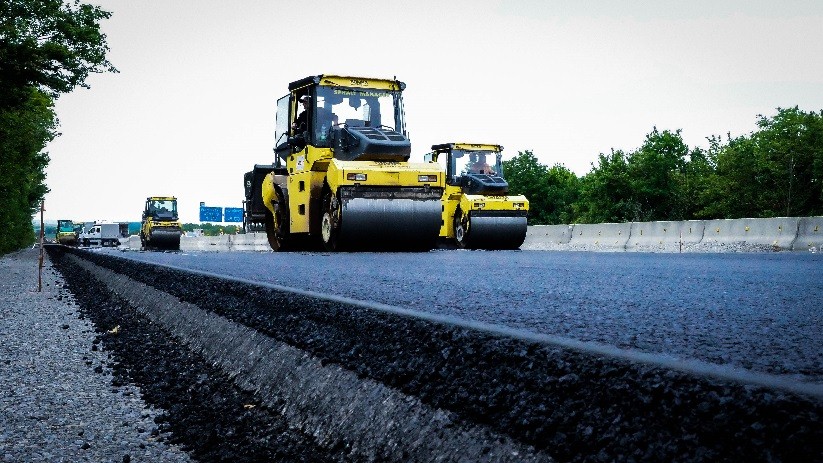
Gilsonite asphalt modifier (Natural Bitumen / Uintaite / Natural Asphalt) is a naturally occurring solid hydrocarbon with an asphaltene content exceeding 80% and a softening point of 160–220°C. When blended into conventional asphalt binders or hot mix asphalt (HMA), Gilsonite behaves as an ultra-hard, chemically compatible bitumen fraction — hardening the binder, raising its performance grade, and significantly extending pavement service life. Unlike synthetic polymer modifiers such as SBS or EVA, Gilsonite requires no chemical treatment, no compatibility additives, and no specialized mixing equipment. It dissolves directly into asphalt binders at standard plant temperatures.
Gilsonite has been used as an asphalt binder modifier for over 60 years across road networks, airport runways, highways, and heavily trafficked intersections worldwide. Today, a growing body of peer-reviewed research — published in Construction and Building Materials, Road Materials and Pavement Design, and leading pavement engineering journals — confirms and quantifies Gilsonite’s performance advantages across all standard pavement distress modes.
Why Add Gilsonite to Asphalt? — The Core Engineering Case
Conventional petroleum-derived asphalt binders face well-documented performance limitations: rutting under heavy traffic at high temperatures, thermal cracking at low temperatures, moisture-induced stripping, and accelerated aging under oxidative stress. Synthetic polymer modifiers (SBS, EVA, PPA) address some of these problems but introduce high cost, supply chain complexity, and processing requirements that limit their use in many markets.
Gilsonite addresses the most critical pavement distress mode — rutting — through a fundamentally different mechanism. Because its chemistry is naturally bituminous (high asphaltene content, compatible with petroleum binders), Gilsonite blends at the molecular level with the binder rather than forming a polymer network. The result is a stiffer, higher-viscosity binder that resists permanent deformation under slow, heavy loads — without requiring reactive chemistry or specialized plant operations.
Performance Benefits of Gilsonite Asphalt Modifier — Scientific Evidence
1. Rutting Resistance — High-Temperature Performance
Rutting is the primary failure mode in asphalt pavements under heavy traffic at elevated service temperatures. Gilsonite’s high softening point (160–220°C) and high asphaltene content directly increase the stiffness and elasticity of the asphalt binder at high temperatures.
Research published in Petroleum Science and Technology (Akbari Nasrekani et al.) confirmed that Gilsonite modification significantly improves rutting resistance of asphalt concrete, with dynamic shear rheometer (DSR) testing showing substantially increased complex modulus (G*) values — indicating higher stiffness and lower susceptibility to permanent deformation under repeated loading. A separate study published in Construction and Building Materials (Saberi et al., 2023) confirmed that Gilsonite significantly improved high-temperature rutting resistance and fatigue life at low strain levels.
Key measured outcomes:
- Softening point increase: typically 8–15°C higher than unmodified binder at 5–15% Gilsonite addition
- Penetration decrease: 30–50% lower penetration — indicating significantly harder binder
- Performance grade upgrade: Gilsonite routinely upgrades binders by one full PG high-temperature grade (e.g., PG 64 → PG 70 or PG 76)
- Marshall stability increase: laboratory testing with 10% Gilsonite showed stability of 1,357 kg vs. 1,097 kg for unmodified asphalt — a 23% improvement
2. Pavement Service Life Extension
The combination of improved rutting resistance, higher stiffness, and better aggregate adhesion directly translates to longer pavement service life. Field experience consistently shows that Gilsonite-modified pavements in high-stress traffic environments — heavily loaded intersections, bus stops, port access roads, airport aprons — deliver 2 to 3 times longer service life compared to conventional unmodified asphalt under equivalent traffic loading.
This life extension has direct economic implications: a pavement that lasts three times longer requires only one-third the maintenance expenditure over a 30-year lifecycle, even at a higher initial material cost.
3. Moisture Resistance and Anti-Stripping Performance
Water-induced stripping — the loss of adhesion between aggregate and binder in the presence of moisture — is a major cause of premature pavement failure. Gilsonite improves moisture resistance through two mechanisms: its high asphaltene content strengthens the binder-aggregate bond, and its nitrogen-containing heterocyclic compounds actively improve adhesion between the bitumen film and aggregate surfaces.
Research by Feng et al. confirmed moisture damage resistance improvement in Gilsonite-modified asphalt. Independent laboratory evaluation (IOP Conference Series, 2024) confirmed that Gilsonite addition to 60/70 penetration bitumen changes asphalt properties in ways that improve aggregate adhesion and resistance to water stripping — attributed to the 3.2% nitrogen content and 27% maltene fraction in natural Gilsonite.
4. Increased Viscosity and Binder Stiffness
Gilsonite increases the Brookfield viscosity of asphalt binders, improving their load-carrying capacity under slow or stationary loads — the most demanding condition for rutting. Higher viscosity binders form thicker, more stable asphalt films around aggregate particles, improving resistance to mix drainage at elevated temperatures and reducing binder migration in storage or during transport of asphalt mixes.
5. Improved Fatigue Performance at Intermediate Temperatures
Research published in Construction and Building Materials (ScienceDirect) on Crumb Rubber and Gilsonite combinations confirmed that Gilsonite increases resilient modulus (Mr), permanent deformation resistance, tensile strength, fracture energy, and intermediate temperature performance. At low strain levels, Gilsonite-modified binders show improved fatigue life compared to base binders — a critical parameter for pavements under high-frequency traffic loading.
6. Skid Resistance
Gilsonite’s nitrogen-containing heterocyclic compounds increase the surface friction between road and vehicle tires. Research using the British Pendulum Tester (BPT) on Gilsonite-modified porous asphalt mixtures (Jurnal Inotera, 2024) confirmed improved skid resistance values — an important safety parameter, particularly in wet conditions and during emergency braking.
7. RAP (Recycled Asphalt Pavement) Rejuvenation — 2025 Research
One of the most significant emerging applications of Gilsonite in modern pavement engineering is its use with high-RAP content asphalt mixtures. Research published in Construction and Building Materials (Amini & Akrami, 2023) confirmed that Gilsonite improves the performance and rheological properties of RAP binders when used with nanoclay — enabling the use of higher RAP percentages while maintaining or exceeding the performance of virgin asphalt.
A 2025 study published in Case Studies in Construction Materials (ScienceDirect, 2025) directly investigated Gilsonite-Modified Soft Binder (GMSB) for enhancing fatigue, rheological, and cracking characteristics of Reclaimed Asphalt Pavement (RAP) binder. The study evaluated ten binder compositions using MSCR and LAS tests for rutting and fatigue resistance. Key findings: 12% Gilsonite in soft binder achieved optimal elastic properties and reduced stress sensitivity, significantly improving high-temperature rutting resistance and fatigue life at low strains in high-RAP mixtures. This positions Gilsonite as a key enabler of sustainable, circular pavement construction — reducing reliance on virgin bitumen while improving pavement performance.
8. Thermal Stability Enhancement — 2023–2025 Research Frontier
Research published in Construction and Building Materials (Saberi, Wang, Liu — 2023) explored combining Gilsonite with phase change materials (PEG) to simultaneously improve high-temperature rutting resistance and low-temperature thermal cracking resistance — the two competing performance requirements that have historically limited Gilsonite’s use in cold climates. The study, funded by the U.S. Department of Transportation (National Center for Transportation Infrastructure Durability & Life-Extension), confirmed that a binder with 6% Gilsonite + 5% PEG achieved superior rutting AND low-temperature cracking resistance simultaneously — overcoming the primary limitation of Gilsonite-only modification and opening new applications in northern climates and high-altitude road networks.
What is Gilsonite — Chemistry and Classification
Gilsonite is mined in underground shafts and resembles a shiny, black substance similar in appearance to the mineral obsidian. It is brittle and usually micronized into dark brown powder. It is mainly composed of asphaltenes — thus Gilsonite is classified as a Natural Asphalt and also known as uintaite or uintahite. Discovered in the 1860s, it was first marketed as a lacquer, electrical insulator, and waterproofing compound. This unique mineral is used in more than 160 products, primarily in dark-colored printing inks and paints, oil well drilling muds and cement, asphalt modifiers, foundry sand additives, and a wide variety of chemical products.
What Are Asphaltenes?
Asphaltenes are molecular substances found in crude oil, along with resins, aromatic hydrocarbons, and alkanes. They consist primarily of carbon, hydrogen, nitrogen, oxygen, and sulfur, as well as trace amounts of vanadium and nickel. The C:H ratio is approximately 1:1.2. Asphaltenes are defined as the n-heptane-insoluble, toluene-soluble component of carbonaceous material such as crude oil, bitumen, or coal — with molecular masses in the range of 400–1,500 u. In Gilsonite, asphaltene content exceeds 80%, making it one of the richest natural sources of asphaltenes — and explaining its exceptional performance as an asphalt hardener and modifier.
Gilsonite as a Natural Asphalt Hardener
Gilsonite (Natural Bitumen) are naturally occurring hydrocarbon substances characterized by a high softening point (above 110°C) in the class known as asphaltite. They are mined much like other minerals and sold essentially in their native state. They are fully compatible with asphalt and have long been known as asphalt hardeners and reinforcing agents. Gilsonite is currently sold all over the world as a road bitumen modifier in the form of a dry bulk solid granular powder.
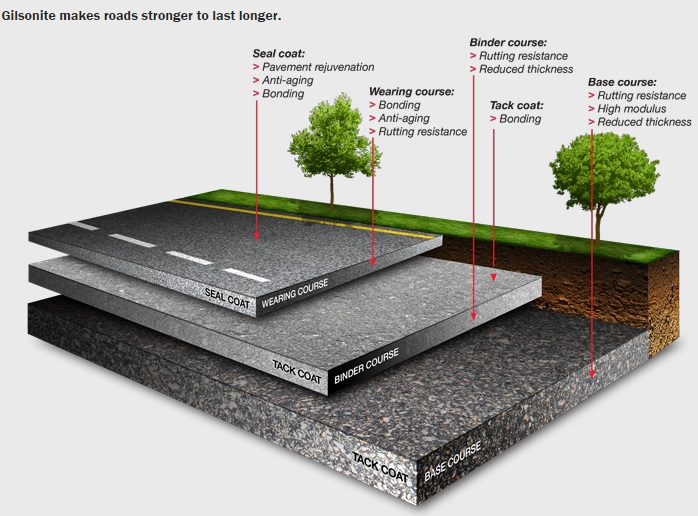
The mixture of Gilsonite into road asphalt relates to a base stock composition comprising a blend of natural bitumen and a rubber latex residue. The base stock may be used alone as a paving material or emulsified to form a natural bitumen emulsion. The mixture of natural bitumen reinforces asphalt against rutting and prevents thinning of the asphalt layer over time.
Economic Advantages of Gilsonite Asphalt Modification
- Powdered Gilsonite added to asphalt paving mixes doubles or triples the pavement lifetime in high-stress environments
- The price of asphalt is decreased by around 10% when Gilsonite replaces a portion of petroleum bitumen
- No chemical polymer modifiers are needed to achieve modified bitumen performance — eliminating import dependency on synthetic polymers
- Up to 60% lower cost compared to all manufactured polymer bitumen (SBS, EVA) while delivering equivalent or superior performance in warm climates
- Gilsonite can replace up to 15% of refinery bitumen by volume — direct raw material cost saving
- Increased thermal stability: Gilsonite-modified polymer bitumen has a thermal tolerance range of –30°C to +110°C, far exceeding standard refinery bitumen (melts above 70°C, cracks at 0°C)
- Decrease in bitumen’s penetration rate and increase in resistance to water stripping
- Improves load-bearing capacity, reduces highway rutting and shoving
- Improves ductility and resistance to low-temperature cracking
- Increases bitumen’s softening point temperature and Brookfield viscosity
- The resulting polymer bitumen is highly water-repellent and tolerant against polar, acidic, and alkaline solvents
- Stronger adhesion of asphalt to aggregates — reducing stripping and delamination
Gilsonite Asphalt Modifier vs. Synthetic Polymer Modifiers
| Performance Parameter | Gilsonite Modified | SBS Modified | EVA Modified | PPA Modified |
|---|---|---|---|---|
| Rutting Resistance | Excellent | Excellent | Good | Excellent |
| Fatigue Resistance (low strain) | Good–Excellent | Excellent | Good | Moderate |
| Moisture Resistance | Good–Excellent | Good | Moderate | Good |
| Low-Temperature Cracking | Moderate* | Excellent | Good | Poor |
| RAP Compatibility | Excellent | Good | Moderate | Good |
| Plant Processing | Standard equipment | Special mixer needed | Special mixer needed | Standard |
| Environmental Profile | Natural, non-toxic | Synthetic polymer | Synthetic polymer | Synthetic acid |
| Cost vs. Unmodified | Low–Moderate | High | High | Moderate |
| Cost vs. SBS | 60% lower | Baseline | Similar | Lower |
*Note: At standard concentrations (5–15%), Gilsonite may reduce low-temperature ductility. For cold-climate applications, combined Gilsonite + PEG (phase change material) or Gilsonite + Crumb Rubber formulations — confirmed effective in 2023 research (Construction and Building Materials, Saberi et al.) — fully address this limitation.
How to Add Gilsonite to Asphalt — Application Methods
Wet Process (Binder Modification)
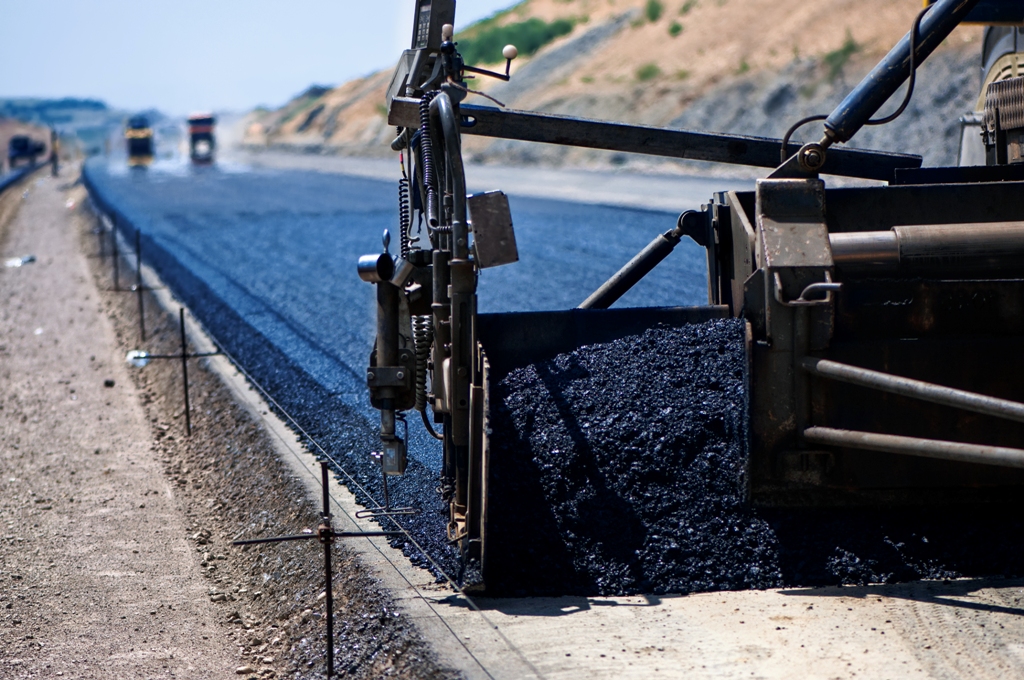
Gilsonite is blended directly into the hot asphalt binder at the terminal or refinery. Micronized Gilsonite (200–325 mesh) dissolves into the binder at 150–180°C using standard mixing equipment — no high-shear mixer required. The modified binder is then transported and used in asphalt plant operations without process changes. Recommended dosage: 5–15% by weight of binder.
Dry Process (Mix Addition)
Granulated or powder Gilsonite is added directly to the hot mix asphalt drum or pugmill as a dry aggregate substitute. This method is particularly effective for on-site modification and for projects where terminal blending is not feasible. Recommended dosage: 1–3% by total mix weight.
Optimal Gilsonite Content
Laboratory research consistently identifies 6–10% Gilsonite by binder weight as the optimal range for most paving applications, balancing improved rutting resistance, fatigue performance, and moisture resistance without adverse rheological effects. For specific high-temperature or HMAC applications, concentrations up to 15% may be used.
Gilsonite Asphalt Applications
- Highway and motorway paving — high-speed, heavy-vehicle environments requiring long-life, rut-resistant surfaces
- Urban intersections and bus stops — high-stress, slow-speed loading conditions where conventional asphalt fails rapidly
- Airport aprons and taxiways — extreme loading, fuel spill resistance, and thermal stability requirements
- Port and industrial access roads — heavy static and dynamic loading from trucks and port equipment
- Stone Matrix Asphalt (SMA) — Gilsonite improves stability, reduces drain-down, and enhances fatigue life in premium SMA mixtures
- High RAP content mixtures — enables circular pavement construction with higher recycled content without performance sacrifice
- Porous asphalt — improves stability and skid resistance in drainage-type surface courses
Technical Specifications — Gilsonite for Asphalt Modification
Two primary grades are available for asphalt modification:
Grade A — Premium Asphalt Modifier
| No | Test | Result | Method |
|---|---|---|---|
| 1 | Ash Content, wt% | 8–10.8 | ASTM D174 |
| 2 | Moisture Content, wt% | <1 | ASTM D173 |
| 3 | Volatile Matter, wt% | 69 | ASTM D175 |
| 4 | Fixed Carbon, wt% | 25 | ASTM D172 |
| 5 | Solubility in CS₂, wt% | 91 | ASTM D4 |
| 6 | Specific Gravity @ 25°C | 0.98 | ASTM D3289 |
| 7 | Softening Point, °C | 200–220 | ASTM D36 |
| 8 | Flash Point | >400 | Cleveland O.C. |
| 9 | Penetration @ 25°C | 0 | ASTM D5 |
| 10 | Particle Size (mesh) | >200 | Tyler |
Grade B — Standard Asphalt Modifier
| No | Test | Result | Method |
|---|---|---|---|
| 1 | Ash Content, wt% | 9–14 | ASTM D174 |
| 2 | Moisture Content, wt% | <1 | ASTM D173 |
| 3 | Volatile Matter, wt% | 63 | ASTM D175 |
| 4 | Fixed Carbon, wt% | 29 | ASTM D172 |
| 5 | Solubility in CS₂, wt% | 89 | ASTM D4 |
| 6 | Specific Gravity @ 25°C | 1.11 | ASTM D3289 |
| 7 | Softening Point, °C | 220 | ASTM D36 |
| 8 | Flash Point | >420 | Cleveland O.C. |
| 9 | Penetration @ 25°C | 0 | ASTM D5 |
| 10 | Particle Size (mesh) | 200 | Tyler |
General Properties Range
| Property | Value | Test Method |
|---|---|---|
| Softening Point | 160–220°C | ASTM D36 |
| Penetration @ 25°C | 0 | ASTM D5 |
| Specific Gravity | 1.04–1.10 g/cm³ | ASTM D70 |
| Solubility in CS₂ | Min. 85–92% | ASTM D4 |
| Ash Content | Max. 3–8% | ASTM D271 |
| Moisture Content | Max. 1% | ASTM D95 |
| Particle Size (Asphalt Grade) | 200 mesh (75 μm) or 100 mesh (150 μm) | Tyler/API |
| Asphaltene Content | >80% | ASTM D3279 |
Analysis of Natural Rock Bitumen (Gilsonite)
| No | Test | Result | Test Method |
|---|---|---|---|
| 1 | Ash Content, wt% | 5 | ASTM D3174 |
| 2 | Moisture Content, wt% | 1% | ASTM D3173 |
| 3 | Volatile Matter, wt% | 63 | ASTM D3175 |
| 4 | Solubility in CS₂, wt% | 81 | ASTM D4 |
| 5 | Specific Gravity @ 25°C | 1.11 | ASTM D3289 |
| 6 | Normal Heptane Insolubles, wt% | 79 | ASTM D3279 |
| 7 | Color in Mass | Black | — |
| 8 | Color in Streak or Powder | Black | — |
| 9 | Softening Point, °C | 175 | ASTM D36 |
| 10 | Penetration @ 25°C | 0 | ASTM D5 |
Element Analysis
| No | Element | Result, wt% | Test Method |
|---|---|---|---|
| 1 | Carbon | 84 | ASTM D5291 |
| 2 | Hydrogen | 7.1 | ASTM D5291 |
| 3 | Nitrogen | 3.67 | ASTM D5291 |
| 4 | Oxygen | 3.1 | ASTM D5291 |
| 5 | Sulphur | 4 | LECO(S) Analyzer |
Importance of Asphalt Quality — Economic, Environmental & Safety Perspectives
The importance of asphalt, because of its use in road networks, airports, highways, and urban infrastructure, is obvious to everyone worldwide. Asphalt with adequate quality matters in several critical dimensions:
Economic: A considerable portion of municipalities’ budgets — their Civic Engineering, Roads and Transport sections — are spent on manufacturing, applying, and maintaining asphalt. If asphalt can be manufactured to have two to three times longer effective lifetime, the costs related to asphalt maintenance would be reduced commensurately. It is also more economical when Gilsonite (Natural Bitumen) is used as a modifier or partial replacement for petroleum bitumen.
Environmental: The bitumen that exists in asphalt, due to containing heavy aromatic substances that can be released into the environment after rainfall, can pollute underground waters. This pollution can be reduced by replacing a small percentage of the bitumen with natural substances such as Gilsonite (Natural Bitumen) or by using complexing materials.
Driving Safety: Good quality asphalt with low deformation susceptibility, low-temperature susceptibility, high resistance to water stripping, and high friction rate will help driving safety at high speeds and in different weather conditions — cold, warm, and freezing.
Protecting Natural Resources: Stone materials are used alongside bitumen in manufacturing asphalt. By extending the effective lifetime of asphalt through Gilsonite modification, the consumption of those aggregate materials is also decreased.
Gilsonite Mixture in Road Asphalt — Composition
It has been discovered that asphalt cement can be toughened with natural bitumen and thinned with a reactive oil. Reactive oil is an oil that contains a high content of unsaturated fatty acids. By using a reactive oil, the oil cures or reacts after application of the asphalt cement to the highway, allowing for lower viscosity application while curing later to prevent rutting.
Gilsonite preferably has a melting or softening point near about 300°F (149°C) so that it is more easily softened and blended with petroleum asphalt at plant temperatures.
A typical Gilsonite-modified asphalt composition consists essentially of:
- 100 parts by weight of a petroleum asphalt
- 1–10 parts by weight of a natural bitumen (Gilsonite)
- 1–10 parts by weight of a thinning reactive oil comprising at least 60% unsaturated fatty acid content (14–24 carbon atoms)
- 1–10 parts by weight of an elastomer (gel content up to 95% by weight)
Gilsonite modified asphalt binders generally do not increase binder content requirement in pavement mixtures — a key operational advantage. Performance grading of binders and pavement mixtures is evaluated according to the Superpave PG system, developed under the FHWA Strategic Highway Research Program (SHRP) — providing engineering properties directly related to pavement performance in service.
Packaging and Supply
Packing of Natural Bitumen — Lump and Powder Micronized Form
- Gilsonite in lump form (natural rock) — packed in 500–1,000 kg jumbo bag
- Gilsonite 200 mesh — packed in 500–1,000 kg jumbo bag
- Gilsonite 300 mesh — packed in 500–1,000 kg jumbo bag
- Gilsonite 30–40 mesh — packed in 500–1,000 kg jumbo bag
- Gilsonite 100 mesh — packed in 500–1,000 kg jumbo bag
- Gilsonite 300 mesh — packed in 25 kg PP bag
- Gilsonite 200 mesh — packed in 25 kg multi-paper bag
- Gilsonite 200 mesh — packed in 50 lbs multi-paper bag
- Gilsonite 30–40 mesh — packed in PP bag on pallet
- Gilsonite Bulk on vessel
| Form | Particle Size | Package | Primary Use |
|---|---|---|---|
| Micronized Powder | 200 mesh (75 μm) | 25 kg multi-wall paper bag / 500–1,000 kg jumbo bag | Wet process binder modification |
| Micronized Powder | 100 mesh (150 μm) | 25 kg bag / jumbo bag | Dry process mix addition |
| Granulated | 30–40 mesh | Jumbo bag / PP bag on pallet | Dry process, SMA |
| Lump | Natural rock form | 500–1,000 kg jumbo bag | Terminal blending, bulk modification |
Container capacity: 20ft container = 18–20 MT (jumbo bags) | 22–23 MT (25 kg bags)
Stocked at Dubai (Jebel Ali Port) and Mersin, Turkey for fast delivery to Middle East, Africa, Europe, and South Asia.
Frequently Asked Questions — Gilsonite in Asphalt
What is Gilsonite asphalt modifier?
Gilsonite asphalt modifier is a naturally occurring solid bitumen (Natural Asphalt / Uintaite) with over 80% asphaltene content that is blended into conventional asphalt binders to improve high-temperature performance, rutting resistance, softening point, and pavement service life. It is compatible with all standard petroleum asphalt binders and can be processed using standard plant equipment.
How much Gilsonite should be added to asphalt?
For binder modification (wet process), the recommended dosage is 5–15% Gilsonite by weight of the asphalt binder. Laboratory research identifies 6–10% as optimal for most applications. For dry process mix addition, 1–3% by total mix weight is typical. Higher concentrations (up to 15%) are used for HMAC and airport pavement applications.
Does Gilsonite improve rutting resistance?
Yes. Peer-reviewed research consistently confirms that Gilsonite modification significantly improves rutting resistance of asphalt binders and hot mix asphalt. DSR testing shows increased complex modulus (G*) and reduced phase angle, and dynamic creep tests show substantially lower permanent deformation under repeated loading. Performance grade is typically upgraded by one full PG high-temperature grade.
How does Gilsonite compare to SBS polymer modifier?
For rutting resistance at high temperatures, Gilsonite delivers comparable performance to SBS at a cost that is approximately 60% lower. Unlike SBS, Gilsonite requires no high-shear mixing, no compatibility additives, and no special storage. SBS has an advantage in low-temperature crack resistance, making SBS preferred for cold-climate applications and Gilsonite preferred for warm-climate and tropical environments.
Can Gilsonite be used in cold climates?
Standard Gilsonite alone may reduce low-temperature ductility at higher dosages. For cold-climate applications, Gilsonite is most effective when combined with phase change materials (PEG) or crumb rubber — combinations confirmed effective in 2023 research (Construction and Building Materials, Saberi et al.) that balance high-temperature rutting resistance with improved low-temperature cracking resistance.
Is Gilsonite environmentally safe for road construction?
Yes. Gilsonite is a naturally occurring mineral with no hazardous reaction products. Unlike synthetic polymer modifiers (SBS, EVA) which are petroleum-derived synthetic materials, Gilsonite is a natural mineral with a lower environmental burden. It is non-toxic during handling, and its use in asphalt reduces the need for synthetic polymer modifiers.
What is the difference between Gilsonite and natural asphalt?
Gilsonite is a specific type of natural asphalt (asphaltite) mined in concentrated vein deposits. While “natural asphalt” is a broad category including lake asphalts (Trinidad Lake Asphalt, TLA) and rock asphalts, Gilsonite is distinguished by its exceptionally high softening point (160–220°C vs. ~95°C for TLA), very high asphaltene content (>80%), and near-zero penetration — properties that make it one of the most effective natural asphalt binder modifiers available.
What particle size of Gilsonite is used for asphalt modification?
For wet process binder modification: 200 mesh (75 μm) is standard, providing complete dissolution in hot binder at mixing temperatures. For dry process mix addition: 100 mesh (150 μm) or 30–40 mesh (granulated) grades are used, providing good distribution through the aggregate-binder matrix during hot mixing.
Related Pages
- What is Gilsonite — properties, chemistry, and global applications
- Gilsonite Price 2026 — current FOB pricing by grade and mesh size
- Natural Asphalt — overview of natural asphalt types and comparisons
- Gilsonite in Construction — waterproofing, coatings, and industrial applications
- Gilsonite in Oil & Gas — drilling fluid and cementing applications
Order Gilsonite Asphalt Modifier — RAHA Gilsonite Co.
RAHA Gilsonite Co. supplies Gilsonite asphalt modifier in all standard grades — micronized powder (100, 200, 300 mesh), granulated (30–40 mesh), and lump form — with full technical documentation: COA, MSDS/SDS, ASTM compliance, and SGS/Intertek inspection on request.
- 📧 info@gilsoniteco.com
- 📱 WhatsApp: +905395277445
- 🌐 Submit a Technical Enquiry →
RAHA Gilsonite Co. · Dubai · Ankara · FOB Mersin & Jebel Ali
