RAHA Gilsonite Co. supplies caustic soda — sodium hydroxide — in flake, pearl and liquid form, in container quantities, to industrial buyers worldwide. This page covers what we supply, the industries we supply it to, how it is packed and shipped, and what to put in an enquiry so a firm quotation comes back on the first reply.
What we supply
One chemical, three physical forms. Which one suits you depends on how far the material travels, who handles it at your end and what your process needs — not on which has the highest number on the data sheet.
| Form | Strength | Packing | Usually suits |
|---|---|---|---|
| Flakes | 98% ± 1 | 25 kg bags, 1,000 and 1,200 kg jumbo | Bulk consumption, lowest cost per tonne of NaOH |
| Pearls | 99.0% min | 25 kg bags, 1,000 and 1,200 kg jumbo | Low dust, free flowing, automated dosing, humid climates |
| Liquid | 48% min | IBC | Plants with tank storage and continuous consumption |
The full specification of each form, the figures from our data sheets and a guide to choosing between them are set out on the grades and specification page, with the technical data sheets available to download.
Industries we supply
We supply caustic soda into every sector listed below. Rather than simply name them, what follows is what the chemical actually does in each one and which form buyers in that sector normally take — so you can see at a glance whether what we ship is what your process needs.
Soap and detergent manufacturing
The original use and still one of the largest. Caustic soda saponifies fats and oils — it splits the triglyceride and forms the sodium salt of the fatty acid, which is soap. It is also the alkali in liquid detergents and in the neutralisation of sulphonic acid. Solid grades are usual, dissolved on site to the working strength.
Oil refining and petrochemicals
Caustic washing removes mercaptans, hydrogen sulphide and naphthenic acids from refinery streams, which is what brings a product within its sulphur and acidity specification. Refineries consume it continuously, which is why they are among the few buyers who take liquid rather than solid.
Water and wastewater treatment
Used to raise pH and alkalinity, to precipitate dissolved heavy metals as hydroxides, and to control corrosion in distribution systems. Dosing is continuous and accurate, so liquid is preferred where tank storage exists; plants without it dissolve solid into a day tank.
Textiles and cotton processing
Mercerisation treats cotton with concentrated caustic soda under tension. The fibre swells and its structure changes permanently, which raises tensile strength, gives lustre and markedly improves dye uptake. Caustic soda is also used in scouring to strip waxes and natural oils before dyeing.
Pulp and paper
In the kraft process, caustic soda with sodium sulphide forms the white liquor that dissolves lignin and frees the cellulose fibre. It is used again in bleaching stages and in the deinking of recovered paper. Volumes here are large and continuous.
Food processing
Caustic peeling of fruit and vegetables, cocoa processing, olive curing, and the caustic stage of clean-in-place systems in dairies and breweries. This sector is the one most sensitive to trace impurities, so the specification matters more than the headline purity.
Biodiesel production
Caustic soda reacts with methanol to form sodium methoxide, the catalyst for transesterification of vegetable oil into methyl ester. Water content is critical here: moisture in the caustic drives the side reaction that forms soap instead of biodiesel, which is why solid grades are kept sealed and dry until the moment of use.
Alumina and metallurgy
The Bayer process digests bauxite in hot caustic soda solution, dissolving the alumina and leaving the iron and silica behind as red mud. Alumina refining is one of the largest single consumers of caustic soda in the world. It is also used in metal cleaning, etching and surface preparation.
Pharmaceuticals and chemicals
pH control, neutralisation, and as a reagent in synthesis of intermediates. Also widely used for equipment cleaning and sanitation where residue limits are tight.
Drilling fluids
Caustic soda controls alkalinity in water-based drilling mud, activates lignite and lignosulphonate thinners, removes magnesium from hard make-up water and seawater, and slows corrosion of the drill string. We cover this in detail on the caustic soda for drilling fluids page, alongside the rest of our drilling fluid range.
What drives the price of caustic soda
We quote on enquiry rather than publishing a price, because the figure depends on the form, the quantity, the packing and the destination. But it is worth understanding what moves the market, because caustic soda does not price like an ordinary commodity.
Caustic soda is a co-product of chlorine. Both come out of the same electrolysis cell in a fixed ratio, so producers cannot make more caustic without making more chlorine. When chlorine demand is strong, caustic comes out as a by-product and its price softens. When chlorine demand falls, cells run slower, caustic supply tightens and its price rises — even if demand for caustic itself has not changed at all. This is why caustic soda prices sometimes move in the opposite direction to what the market for caustic would suggest.
On top of that, what you pay for a specific shipment depends on:
- Form. Liquid at 48 per cent is more than half water by weight, so freight per tonne of actual NaOH is much higher over distance.
- Quantity. Full container loads price differently from part loads, and multi-container orders differently again.
- Packing. Jumbo bags, palletised 25 kg bags and loose 25 kg bags each load a different tonnage into the same container.
- Destination and Incoterm. FOB, CFR and CIF are different numbers, and the freight component changes with the route.
Send the four details above with your enquiry and we can quote firm rather than indicative.
Packing and container loading
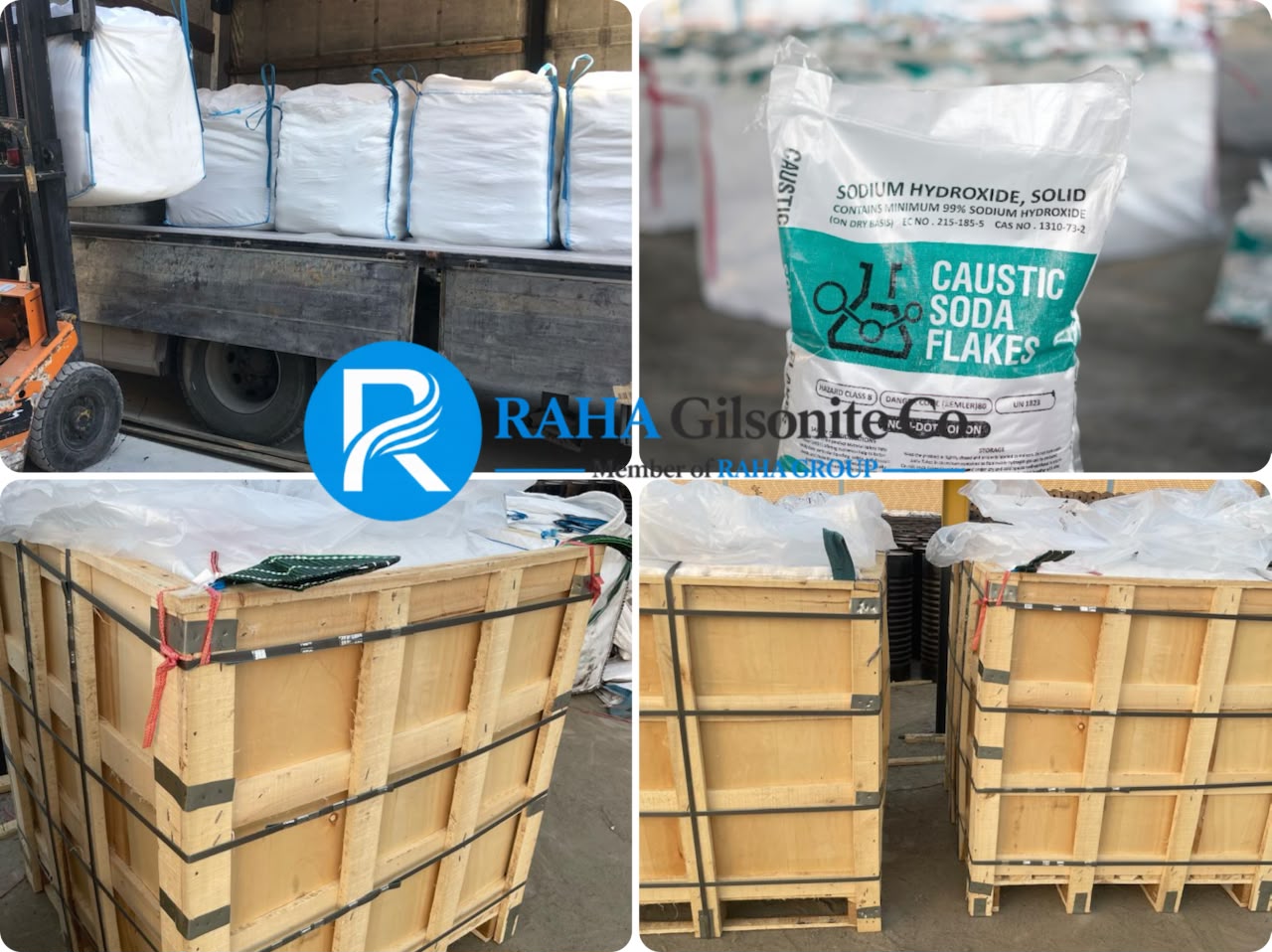
Solid caustic soda ships in 25 kg polypropylene bags or in jumbo bags of 1,000 and 1,200 kg. How much goes into a 20 foot container depends on the packing and on whether the cargo is palletised.
| Packing | With pallets | Without pallets |
|---|---|---|
| 25 kg PP bags | 25 MT | 28 MT |
| 1,000 kg jumbo bags | 20 MT | 20 MT |
| 1,200 kg jumbo bags | 24 MT | 24 MT |
Loading loose puts three more tonnes into a container of 25 kg bags, which lowers the freight cost per tonne. The trade-off is manual stuffing and stripping at both ends, so it suits destinations with labour available and not those relying on a forklift.
Liquid caustic soda is supplied in IBC.
Shipping and commercial terms
| Minimum order | One full 20 foot container |
|---|---|
| Incoterms | FOB, CFR or CIF |
| Loading ports | Jebel Ali or Mersin |
| Payment | 50% by telegraphic transfer in advance, balance agreed with the order |
| Lead time | Confirmed per order, depending on destination and quantity |
| HS codes | 2815.11 solid · 2815.12 solution |
| Transport class | UN 1823 solid · UN 1824 solution · Class 8 |
Quality, documents and inspection
Certificate of analysis
Every consignment ships with a batch certificate of analysis. It is the document that governs that shipment, not the general specification.
Data sheets
Technical data sheets for all three forms and the safety data sheet are published and downloadable, before you contract rather than after.
Samples
Samples are available on request for process trials where the application is sensitive to trace impurities.
Independent inspection
Inspection at loading by SGS, Bureau Veritas, Intertek or the contract surveyor can be arranged at the buyer’s instruction and cost.
How to get a firm quotation
Most enquiries we receive say only “please quote caustic soda”, which means a reply asking four questions before anything useful can be said. Send these with the first message and a firm price comes back instead.
| Tell us | Why it changes the answer |
|---|---|
| Form and strength | Flakes, pearls or liquid. If you are not sure, tell us the application instead and we will say which one we would supply. |
| Quantity | Tonnage and whether this is a one-off or a repeating requirement. Both affect the price. |
| Packing | 25 kg bags or jumbo, palletised or loose. This decides how much goes in the container. |
| Destination and terms | Discharge port and whether you want FOB, CFR or CIF. |
| Any specification limits | If your process has a limit on carbonate, chloride or iron, send it. It is better to check before contracting than to argue over a certificate afterwards. |
What to check when the material arrives
Caustic soda is a simple product to buy badly. Most disputes are not about the grade that was loaded but about what happened to it between the plant and the plant gate. Four checks on arrival settle almost all of them.
Match the certificate to the batch
The certificate of analysis names a batch. Check that the batch marked on the bags is the batch on the certificate, not simply that a certificate arrived. A general specification is not a certificate and should not be accepted as one.
Look at the bags before the contents
Caustic soda is hygroscopic, so damage to the packing is what ruins it. Torn bags, seals that have been opened, water staining or bags that feel solid rather than loose all point the same way. Material that has picked up moisture cakes into a mass that will not dissolve cleanly, and no amount of good analysis at loading changes that.
Expect carbonate to rise, and know how much is reasonable
Sodium carbonate forms when caustic soda meets carbon dioxide in air. A figure slightly above the certificate after a long voyage is normal and is not evidence of a substituted grade. A figure far above it usually means the packing was compromised. If your process is carbonate-sensitive, test on arrival rather than relying on the loading analysis alone.
Confirm the form, not just the name
Flakes and pearls are both “caustic soda” and both are correct against a contract that says only that. If the handling at your end depends on free-flowing beads, the contract should say pearls and the packing should be marked accordingly. This is the single most common mismatch in caustic soda orders and it is avoidable at the quotation stage.
Frequently asked questions
Ordering and terms
What is the minimum order quantity for caustic soda?
One full 20 foot container. In 25 kg bags that is 25 tonnes palletised or 28 tonnes loose; in 1,000 kg jumbo bags, 20 tonnes; in 1,200 kg jumbo bags, 24 tonnes. Liquid caustic soda is supplied in IBC to the same container minimum.
What payment terms do you offer?
50 per cent by telegraphic transfer in advance, with the balance agreed with the order. Terms are confirmed in the proforma invoice before anything ships.
Which Incoterms and loading ports do you work on?
FOB, CFR or CIF, loading from Jebel Ali or Mersin. Which port suits depends on the destination and the routing, and we will say which one gives the better freight when we quote.
How long is the lead time?
It depends on the destination, the quantity and current stock, so it is confirmed with the quotation rather than quoted as a standard figure. Tell us the discharge port and the tonnage and we will give a firm date.
Why do you not publish a price?
Because a single number would be wrong for most buyers. The price depends on the form, the quantity, the packing and the destination, and the market itself moves with chlorine demand because caustic soda is a co-product of chlorine. Send those four details and we quote firm rather than indicative.
Product and quality
Which form of caustic soda should I order?
Flakes for bulk consumption where cost per tonne governs. Pearls where the solid is handled by hand, where dosing is automated, or where the climate is humid. Liquid only where there is tank storage and continuous consumption, because at 48 per cent more than half the weight is water and freight over distance becomes expensive. If you tell us the application we will recommend one.
Can you supply against our own specification?
Yes. Send the specification rather than a grade name, particularly any limit on carbonate, chloride or iron, and we will confirm what can be met before contracting. This matters most in food, pharmaceutical and biodiesel applications, where trace impurities govern rather than headline purity.
What documents come with the shipment?
A batch certificate of analysis for the consignment, the commercial invoice and packing list, the bill of lading, and the safety data sheet. Certificate of origin and any other documents required by the destination are issued as needed.
Can we have the material inspected at loading?
Yes. Independent inspection by SGS, Bureau Veritas, Intertek or the surveyor named in the contract can be arranged at the buyer’s instruction and cost.
Are samples available?
Yes, on request. Samples are worth taking where the process is sensitive to trace impurities and a laboratory trial is cheaper than a failed batch.
Handling and classification
How should caustic soda be stored once it arrives?
Solid: dry, under cover, pallets off the ground and bags sealed. It is hygroscopic and an open bag absorbs moisture and cakes into a mass that will not dissolve properly. Liquid: in an insulated tank, heated or traced in cold climates, because a concentrated solution crystallises well above the freezing point of water.
Is caustic soda classified as dangerous goods?
Yes. Solid sodium hydroxide is UN 1823 and the solution is UN 1824, both hazard Class 8, corrosive. It is a routine classification to ship and no special authorisation is needed, but the packing and documents must be correct.
What are the HS codes?
HS 2815.11 for solid sodium hydroxide and HS 2815.12 for the solution. National tariff schedules add further digits, so confirm the full code with your customs broker before shipping.
Request a quotation for caustic soda
Send the form, the quantity, the packing and the destination port and we will come back with a firm price and a shipping date. If you are not certain which form suits, tell us the application and how the material will be handled at your end, and we will say which one we would supply and why. Samples, data sheets and a batch certificate of analysis are part of the standard package, not extras.
More on caustic soda: Flakes, pearls and liquid — grades and specification · Caustic soda for drilling fluids
