
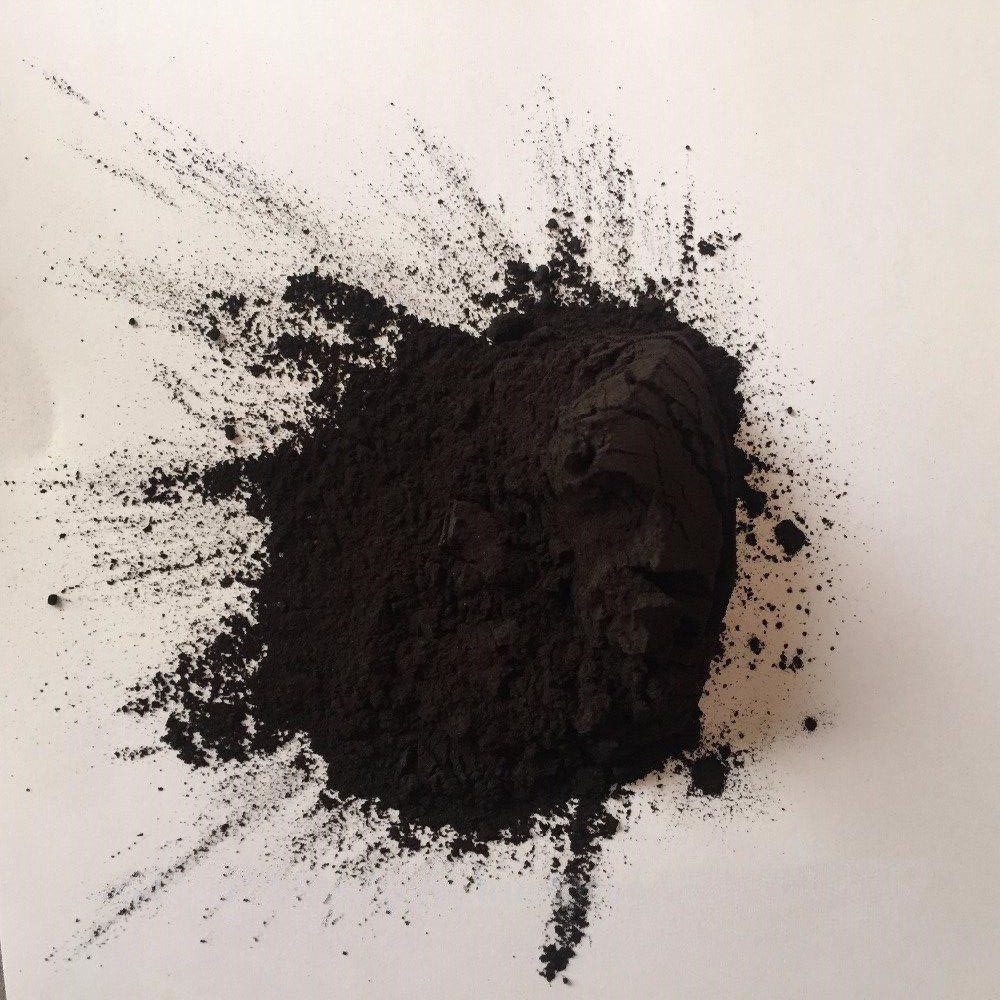
Sulfonated asphalt — also written sulphonated asphalt and sold as sodium asphalt sulfonate — is a shale control and fluid loss additive made water-dispersible by a sulfonation process. It stabilises reactive shale, lowers HTHP fluid loss, improves filter cake quality and increases lubricity, in both water-based and oil-based systems. We manufacture it from gilsonite rather than refinery bitumen, and this page sets out the specification, the process and where the difference matters.
One material, four names
Before anything technical, a naming note — because tenders and specifications use all of these for the same product, and a search for one spelling will not find documents written with the other.
| Name | Where it is used |
|---|---|
| Sulfonated asphalt | American spelling; common in ASTM and US-origin specifications |
| Sulphonated asphalt | British and international spelling; common across the Middle East, Africa, South Asia and Europe |
| Sodium asphalt sulfonate | Chemical naming; appears on safety data sheets and customs documentation |
| SAS | Abbreviation used in mud programmes and daily reports |
All four describe the same class of material. When comparing offers, go by the measured specification rather than the name on the bag.
What sulfonated asphalt does in the mud
Sodium sulfonated asphalt is a shale control additive used to inhibit the swelling and caving of shale caused by hydrous disintegration. It also functions as a lost circulation material, plugging zones where drilling fluid is being lost to the formation.
It is a versatile total mud conditioner: it stabilises shale formations, significantly increases lubricity, lowers high-temperature high-pressure fluid loss and enhances filter cake properties in both oil-based and water-based systems.
-
Inhibits clay shale
Strengthens the wellbore wall, prevents shattering and promotes rapid sealing of fractures.
-
Reduces HTHP fluid loss
At least 40% reduction under high pressure and high temperature — the condition where conventional additives fail.
-
Improves lubricity
Reduces rotational torque and prevents jamming, either alone or synergistically with small amounts of oil, synthetic oil or glycol.
-
Produces thin filter cake
Thin, tenacious and compressible cake that is less sticky — which is what prevents stuck pipe rather than causing it.
-
Prevents stuck pipe
By sealing permeable zones and limiting filtrate invasion, it reduces the differential pressure that causes sticking.
-
Suppresses cuttings swelling
Depresses solid expansion of drill chips, which improves hole cleaning and reduces bit balling.
-
Substitutes for oil additions
Replaces crude oil, waste engine oil and diesel used for lubricity — a real advantage where discharge rules apply.
-
Stabilises at temperature
Reduces high-temperature gelation and keeps mud properties steady through the interval.
Four operational advantages that rarely appear on a datasheet
| Property | Why it matters on the rig |
|---|---|
| Minimal, easily distinguishable fluorescence | Does not hamper well logging or core analysis. Additives with strong fluorescence interfere with hydrocarbon show evaluation, which can mask a pay zone |
| No oil slick or sheen on water | Leaves no rainbow on the sea surface at offshore locations — which is a regulatory issue, not a cosmetic one |
| No emulsifiers needed | Mixes properly without a coupling agent, so one fewer product in the system and one fewer interaction to manage |
| No need to bypass solids control | Can be mixed while the shakers and centrifuges run, rather than stopping solids removal during treatment |
These four are the reasons operators keep specifying sulfonated asphalt after fifty years of alternatives arriving. The filtration performance is matched by other products; the operational profile is harder to replace.
Technical specification
| Property | Specification | Significance |
|---|---|---|
| Water-soluble content | ≥ 90% | Governs dispersion through the mud system |
| Oil-soluble content | ≥ 18% | Allows the same product to function in oil-based and synthetic systems |
| HTHP fluid loss reduction | ≥ 40% | The functional performance figure. Ask for it measured against your base mud |
| pH | 8–10 | Compatible with most systems without shifting the mud pH |
| Moisture | ≤ 10% | Affects flowability and effective dosage per bag |
| Density | 0.98 g/cm³ | Low, so it floats — use a PPA rather than a downward-filtering cell for filtration testing |
| Appearance | Brown, easily breakable pieces or fluidised powder | Hopper handling |
| Recommended dosage | 1–4% | Confirm by laboratory testing against the specific system |
Two grades available
| Grade | Description | When to specify |
|---|---|---|
| Regular | Sodium sulfonated asphalt | General shale control and fluid loss across most systems |
| Potassium enhanced | Potassium salt of sulfonated asphalt, contributing water-soluble potassium ions at approximately 400 ppm per lb of product in the mud system | Where the formation needs the specific action of potassium to minimise water-induced clay swelling |
The potassium grade delivers the same qualities as the regular product plus the ion contribution. In a KCl system it supplements the existing potassium; in a system without one, it provides inhibition without the full cost of a KCl mud.
How we make it: gilsonite rather than refinery bitumen
This is where our product differs from most sulfonated asphalt on the market, and it starts with the feedstock.
Conventional sulfonated asphalt is made from refinery bitumen. Ours is manufactured from gilsonite blended with lignite and reacted with a sulfonating compound and a water-soluble base.
| Component | Proportion by weight | Function |
|---|---|---|
| Gilsonite | 55–60% | The hydrocarbon backbone. Softening point of at least 300 °F, which is what carries thermal performance through to the finished product |
| Lignite | 15–25% | Contributes filtration control and thermal stability |
| Sodium sulfite | 15–20% | The sulfonating agent — attaches the hydrophilic groups |
| Sodium hydroxide | 5–10% | Water-soluble base compound |
| Process parameter | Range |
|---|---|
| Reaction temperature | 210–280 °F, preferred 230–260 °F |
| Reaction time | 0.5–3 hours, to completion of sulfonation |
| Water in the reaction zone | 25–50% by weight of the mixture |
| Drying | Spray drying or conventional means to remove remaining water |
Why the feedstock softening point matters more than the finished product’s. A common claim is that sulfonated asphalt is temperature stable because it no longer has the softening point associated with unreacted asphaltic additives. That is true as far as it goes — sulfonation changes the behaviour. But it does not make the base material irrelevant. A product built on a 300 °F-plus gilsonite backbone carries different thermal performance from one built on soft refinery bitumen, however thoroughly either is sulfonated. When comparing suppliers, ask what the feedstock was and what its softening point is. Most certificates do not say.
Mixing and handling
Sulfonated asphalt emulsifies fully in water. Untreated gilsonite, by contrast, remains on top — which is the whole reason the sulfonation step exists and a quick way to verify you have the treated product.
The material can be mixed into most water-based and all oil-based and synthetic muds. No emulsifiers are required, and mixing can proceed without bypassing the solids control equipment.
Packing and storage
| Packing | Detail |
|---|---|
| Standard bag | 25 kg or 50 lb net, sealed in a 4-in-1 compound paper bag with plastic lining |
| Big bag | 500–1,000 kg for operations with handling equipment |
| Storage | Keep the bag intact and dry. The product is water soluble, so a damaged bag in a wet store is a lost bag |
Sulfonated asphalt, sulfonated gilsonite or untreated gilsonite?
Three related products, three different jobs. The choice is usually made for you by the base fluid.
| Sulfonated asphalt | Sulfonated gilsonite | Untreated gilsonite | |
|---|---|---|---|
| Water dispersible | Yes, ≥ 90% | Yes, partially | No |
| Oil dispersible | Yes, ≥ 18% | Yes | Yes, fully |
| Primary use | Total mud conditioner across WBM and OBM | Shale inhibition in WBM | FLC in OBM and SBM |
| Contains lignite | Yes, 15–25% | No | No |
| Potassium grade available | Yes | On request | Not applicable |
Independent triaxial testing comparing gilsonite-based and conventional sulfonated products across four water-based mud systems is on our shale stabilization page.
Other products from the same feedstock
We process gilsonite into several forms beyond sulfonated asphalt.
| Product | Form | Application |
|---|---|---|
| Sulfonated asphalt | Powder or pieces | Drilling fluid conditioner |
| Liquid gilsonite | Emulsion | Drilling fluids where a liquid addition suits the system |
| Modified gilsonite | Powder | Drilling fluids, to specification |
| Gilsonite pellets | 25 kg bag | Bitumen modifier for road construction |
The pellet grade is used in road construction at scale. Adding gilsonite pellets to asphalt raises the softening point and hardens the binder, while the mix retains flexibility at low temperature — down to around −40 °C in service — which is what prevents thermal cracking.
Frequently asked questions
What is sulfonated asphalt?
A shale control and fluid loss additive for drilling fluids, made water-dispersible by a sulfonation process. It is also written sulphonated asphalt and sold as sodium asphalt sulfonate. It stabilises reactive shale, lowers HTHP fluid loss, improves filter cake quality and increases lubricity in both water-based and oil-based systems.
Is sulphonated asphalt the same as sulfonated asphalt?
Yes. Sulphonated is the British and international spelling, sulfonated the American one, and both describe the same material. Sodium asphalt sulfonate is the chemical name used on safety data sheets and customs documentation, and SAS is the abbreviation used in mud programmes. When comparing offers, go by the measured specification rather than the name.
What does sulfonated asphalt do in drilling mud?
Several things at once. It inhibits clay shale and strengthens the wellbore wall, reduces HTHP fluid loss by at least 40%, improves lubricity and reduces rotational torque, produces a thin compressible filter cake, suppresses swelling of drill cuttings, prevents stuck pipe, and reduces high-temperature gelation. It also substitutes for oil additions used for lubricity.
What dosage of sulfonated asphalt is used?
1 to 4% of the mud volume for most applications. The exact figure depends on shale reactivity, mud weight, bottomhole temperature and the fluid loss target, and should be confirmed by laboratory testing against the specific system.
What is the difference between regular and potassium enhanced grades?
The potassium grade is a specially prepared potassium salt of sulfonated asphalt. It delivers the same qualities as the regular product and additionally contributes water-soluble potassium ions at approximately 400 ppm per lb of product carried in the mud system. That is beneficial where the formation requires the specific action of potassium to minimise water-induced clay swelling.
How is sulfonated asphalt manufactured?
Ours is made from gilsonite with a softening point of at least 300 °F, blended with lignite and reacted with sodium sulfite as the sulfonating agent and sodium hydroxide as the water-soluble base. Typical proportions are 55 to 60% gilsonite, 15 to 25% lignite, 15 to 20% sodium sulfite and 5 to 10% sodium hydroxide. The reaction runs at 210 to 280 °F, preferably 230 to 260, for half an hour to three hours, after which remaining water is removed by spray drying.
Why does the feedstock matter if sulfonation changes the material?
Because sulfonation changes how the material disperses in water, not its underlying thermal behaviour. A product built on a 300 °F-plus gilsonite backbone carries different thermal performance from one built on soft refinery bitumen, however thoroughly either is sulfonated. Ask any supplier what the feedstock was and what its softening point is — most certificates do not say.
Does sulfonated asphalt interfere with well logging?
No, and this is one of its practical advantages. It has minimal and easily distinguishable fluorescence, so it does not hamper well logging or core analysis. Additives with strong fluorescence interfere with hydrocarbon show evaluation, which in the worst case can mask a pay zone.
Can it be used offshore?
Yes. It leaves no oil slick, sheen or rainbow on water at offshore locations, which matters because that is a discharge compliance issue rather than a cosmetic one. It also substitutes for crude oil, waste engine oil and diesel additions used for lubricity, removing those from the system entirely.
Does it need emulsifiers or special mixing?
No. It mixes properly without a coupling agent or emulsifier, and it can be added while the solids control equipment is running rather than requiring a bypass. Sulfonated asphalt emulsifies fully in water — untreated gilsonite by contrast remains on top, which is a quick way to verify you have the treated product.
What is the shelf life and how should it be stored?
Store dry with the bag intact. The product is water soluble, so a damaged bag in a wet store is a lost bag. Standard packing is 25 kg or 50 lb net in a 4-in-1 compound paper bag with plastic lining, which protects against moisture in transit and storage.
What else do you make from gilsonite?
Liquid gilsonite in emulsion form and modified gilsonite for drilling fluids, plus gilsonite pellets used as a bitumen modifier in road construction. Adding pellets to asphalt raises the softening point and hardens the binder while retaining low-temperature flexibility, which prevents thermal cracking.
Related pages
Drilling applications: sulfonated gilsonite shale inhibitor, water based muds, oil based muds, shale stabilization, borehole stabilizer, drilling fluids, deepwater drilling, cementing and oil and gas overview.
Product information: what is gilsonite, specification, properties, powder and granular, asphalt modification, price, MSDS and HS code.
Specify sulfonated asphalt for your system
Send us the mud system, the bottomhole temperature, the shale conditions and whether you need the regular or potassium enhanced grade. We will confirm the specification, state the measured water-soluble content, HTHP fluid loss reduction and pH on the batch certificate of analysis, and accept third-party inspection at loading by SGS, Bureau Veritas or the surveyor named in your contract.
Dubai: No. 2305, Burlington Tower, Business Bay — +971 4 566 4998
Ankara: Karşıyaka District, 749 Street No. 30, Gölbaşı 06830 — +90 312 544 5481
